
How SealTech’s Silicone Waterproofing Meets Strict Building Codes
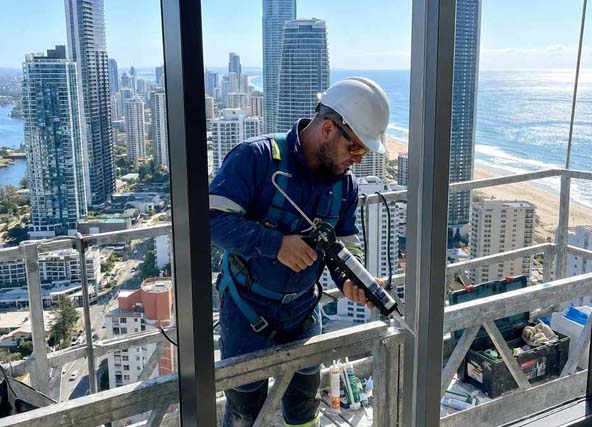
When a commercial or high-density strata project faces inspection, one failed joint can delay handover, affect insurance, and lead to costly joint repairs.
Joint sealing is not just a finishing detail. It is a key waterproofing barrier that must meet strict compliance standards. Generic caulking will not perform in high-movement expansion joints.
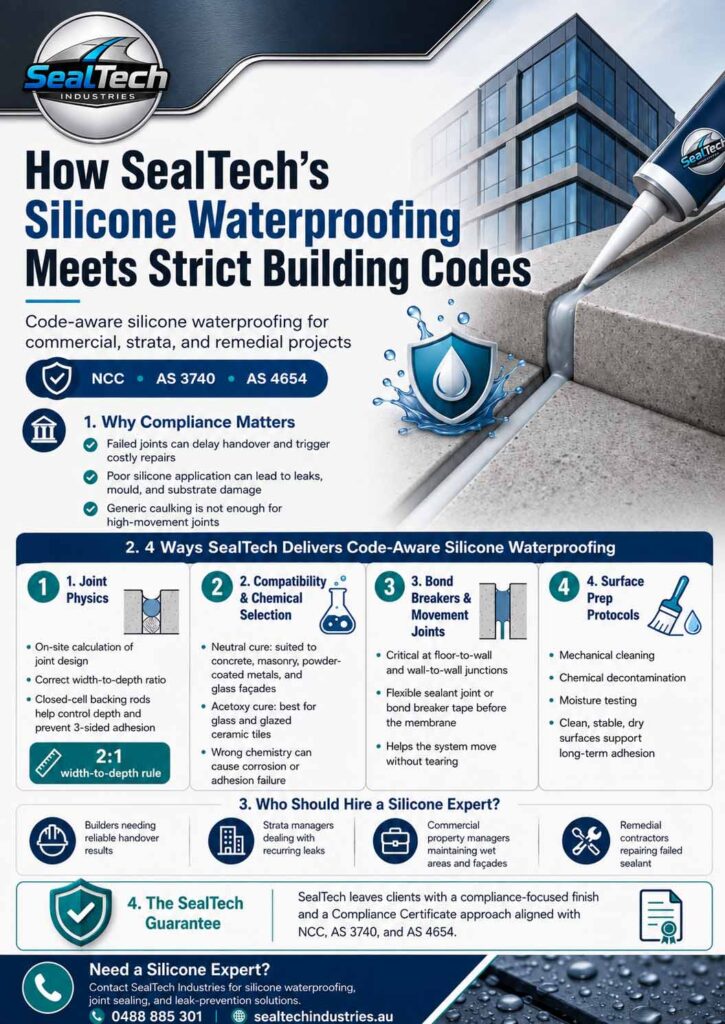
Why Building-Code Compliance Matters in Silicone Waterproofing
Poorly applied silicone can fail long before the rest of the waterproofing system. Common problems include peeling, cracking, shrinkage, gaps, poor adhesion, incorrect sealant choice, and silicone applied over contaminated or damp surfaces. These defects can allow water to pass behind tiles, fixtures, window frames, benchtops, or wall junctions.
SealTech’s silicone waterproofing systems are engineered for movement, durability, and long-term water protection. They help builders, developers, and asset owners achieve sign-off, protect structural integrity, and keep commercial projects watertight for years.
How SealTech Delivers Code-Aware Silicone Waterproofing?
1. Scientifically Calculating Joint Physics
Applying silicone without assessing the joint design is a common cause of compliance failure. Structural expansion joints must be engineered to handle ongoing building movement, including contraction, expansion, and settlement.
Getting the Depth-to-Width Ratio Right
The depth-to-width ratio is critical. Silicone should not simply be pumped into a deep gap. If the sealant is too thick, it can lose flexibility and pull away from the joint edges as the building moves.
Why the 2:1 Rule Matters
For best performance, the joint width should generally be twice its depth. SealTech silicone installers calculate these ratios on-site and use closed-cell backing rods to control sealant depth and prevent three-sided adhesion, which can cause the silicone to split through the centre.
2. Strict Substrate Compatibility & Chemical Selection
The NCC requires sealants to be fit for purpose and compatible with the surfaces around them. Choosing the wrong silicone can cause poor adhesion, joint failure, or even corrosion in surrounding building materials.
| Silicone Type | Chemical Action | Best Used For | Code Risk of Incorrect Use |
| Neutral Cure | Releases non-acidic byproducts during curing. Completely odorless and highly flexible. | Concrete, masonry, powder-coated metals, and glass facades. | High Risk: Essential for concrete and metals. Using an acidic alternative corrodes steel structures and causes adhesion failure on alkaline concrete. |
| Acetoxy Cure | Releases acetic acid (vinegar smell) as it cures. Dries fast and rigid. | Non-porous surfaces like glass and glazed ceramic tiles. | Critical Risk: Must never be used on stone, concrete, or metal substrates as the acid actively eats away at the substrate bonding surface. |
3. Mandatory Bond Breakers and Movement Joints
Under AS 3740 and AS 4654, changes in direction, such as floor-to-wall and wall-to-wall junctions, are high-stress areas that are more likely to crack.
Before the waterproofing membrane is applied, a flexible joint sealant or compliant bond breaker tape must be installed. This creates a flexible bridge, allowing the building frame to move without tearing the waterproofing system.
SealTech silicone expert installs these internal joints with precision to help prevent hidden leaks behind tiles, walls, and finishes.
4. Pristine Surface Preparation Protocols
A sealant is only compliant when it bonds to a clean, stable surface. Inspectors often fail joints applied over dust, moisture, or leftover construction debris. SealTech concrete caulking follows a strict multi-step preparation process to ensure every joint is ready for long-term adhesion and compliance.
- Mechanical Cleaning: Scraping, grinding, or wire-brushing the surface to expose clean, sound substrate.
- Chemical Decontamination: Using a dual-rag solvent wipe to remove oils, grease, release agents, and other hidden contaminants.
- Moisture Testing: Checking concrete or masonry surfaces meet dryness requirements for strong, reliable adhesion.
Why Hire a Silicone Expert?
Hiring a silicone expert helps avoid the common defects caused by rushed or incorrect application. A professional silicone trader or caulker knew which sealant to use, how to prepare the joint, where water is likely to enter, and how building movement affects long-term performance.
This is especially important for:
- Builders needing reliable handover results
- Strata managers dealing with recurring leaks
- Commercial property managers maintaining wet areas and façades
- Remedial contractors repairing failed sealant
The SealTech Guarantee: Certified Compliance
At the end of a project, a general handyman leaves you with a receipt; SealTech professional caulker leaves you with a Compliance Certificate.
This document verifies that every bead of silicone waterproofing on your asset matches the precise requirements of the NCC, AS 3740, and AS 4654. It protects your structural warranties, satisfies your insurers, and ensures a seamless sign-off from your building certifier.
Don’t leave your occupancy certificate to guesswork. Contact SealTech today to secure a qualified silicone expert for your upcoming project.
Previous :
- How SealTech’s Silicone Waterproofing Meets Strict Building Codes June 4, 2026
- Why Filling in Expansion Joints in Concrete Requires Dust-Controlled Cutting for Commercial Sites May 27, 2026
- Vertical Expansion Joints and QBCC Licensing: Why Hiring Unlicensed Caulkers Voids Your Warranties May 26, 2026
- How to Choose the Right Strata Caulking Contractors for High-Rise Facades May 20, 2026
- What to Look for Before Committing to Caulking High-Rise Building Repairs? May 6, 2026
- Questions to Ask Before Hiring Silicone Installers (To Avoid Leaks & Mold) May 5, 2026
- How to Stop Render Cracking Permanently with Expansion Joints April 27, 2026
- Our External Joint Sealing Solutions That Cut Maintenance Costs April 21, 2026
- How SealTech Delivers Long-Term Performance in Lateral Joint Sealing Systems? April 21, 2026
- Innovations in Construction Joint Sealing Materials and Technology April 15, 2026
SealTech Industries
Expert joint sealing & waterproofing solutions for Southeast Queensland.
Contact Us