
Expansion Joints in Trafficable Areas
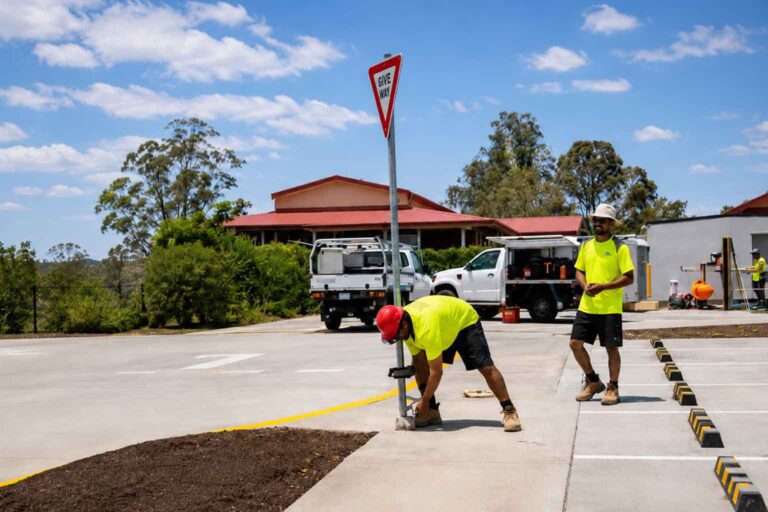
Expansion joints in car parks, warehouses, industrial floors, loading docks, and commercial pavements are exposed to more than water and movement.
They may also be affected by:
- Forklift and vehicle traffic
- Impact loads, Abrasion, and Tyre contact
- Fuel and chemical exposure
- Edge spalling, Dirt build-up and High-pressure cleaning
Soft elastomeric sealants can be damaged when joint edges are not properly supported. In these areas, the design may require armoured nosings, traffic-grade sealants, recessed systems, cover plates, or proprietary floor joint systems.
Protecting the joint edges is especially important. Once the concrete arrises begin to spall, the joint becomes wider and more uneven, making it harder for the waterproofing seal to perform effectively.
Suitable waterproofing solutions may include:
- Traffic-grade polyurethane or polysulphide sealants with the movement capability and durability to withstand abrasion, oils, fuels, and cleaning chemicals.
- Correctly sized closed-cell backing rods to control sealant depth, maintain the correct joint profile, and prevent three-sided adhesion.
- Armoured joint nosings made from epoxy mortar, polymer-modified repair materials, steel, or proprietary edge protection systems to prevent concrete arris damage.
- Recessed sealant systems that position the flexible seal below the traffic surface, reducing direct contact with tyres, wheels, and cleaning equipment.
- Watertight expansion joint cover systems with flexible internal membranes or gland components for areas exposed to heavy traffic and significant structural movement.
- Proprietary floor joint systems designed to accommodate movement while safely transferring wheel loads across the joint.
- Movement-compatible waterproofing membranes installed beneath or integrated with the joint system to provide secondary protection against water ingress.
- Chemical-resistant primers and sealants for loading docks, workshops, warehouses, and industrial facilities where fuels, oils, solvents, or aggressive cleaning agents are present.
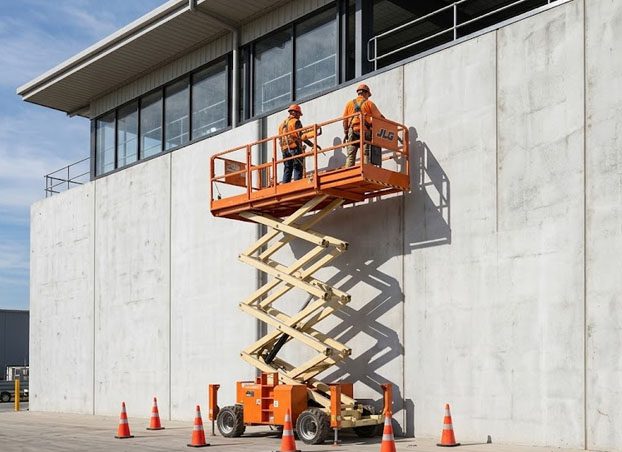
Expansion Joints in Façades and External Walls
How to stop water leakage from an expansion joint of building walls?
 Façade expansion joints must withstand wind-driven rain, UV exposure, temperature changes, and building movement.
The joint design should include:
- Compatible backer rods
- Correct sealant geometry
- Primers where required
- Suitable adhesion surfaces
- Proper tooling
- Drainage or pressure equalisation where needed
- Secondary seals in high-risk areas
- Continuity around windows, panels, and parapets
In curtain walls and rainscreen façades, the external seal may not be the only waterproofing barrier. The full wall system should also be considered, including drainage cavities, flashings, internal air seals, and pressure-equalised compartments.
Below-Ground Industrial and Commercial Expansion Joint Waterproofing
Below-ground expansion joints are designed to accommodate structural movement while preventing groundwater from entering basements, tunnels, lift pits, retaining walls, car parks, and other subterranean structures.
When external access is impossible, the appropriate solution is an internally applied, negative-side expansion-joint waterproofing system. A normal sealant bead or cementitious coating alone is generally insufficient, especially where groundwater creates hydrostatic pressure.
1. Flexible Resin Injection
Where water is actively entering through the joint, flexible polyurethane injection expansion joint is normally carried out first.
The injection material is introduced into the joint, surrounding cracks, and concealed voids to:
- Stop or reduce active water flow and seal water pathways within the concrete
- Fill voids behind the joint and stabilise the area before the main waterproofing system is installed
Rigid epoxy injection should not be used across a functioning expansion joint because it may restrict movement and crack when the structure moves.
Injection is primarily a leak-control treatment. It should not normally be relied upon as the only long-term below-ground expansion joint waterproofing for a structural movement joint.
2. Internal Flexible Joint-Band System
After active leakage has been controlled, a flexible expansion-joint band is installed over the joint from the internal side.
The system typically consists of:
- A flexible FPO, TPE, or elastomeric waterproofing band
- Epoxy adhesive bonded to sound concrete on both sides of the joint
- An unbonded central section positioned directly over the movement gap
- Mechanical restraint where required to resist negative hydrostatic pressure
The central section of the band remains free to deform as the joint opens, closes, or moves laterally. This allows the waterproofing system to maintain continuity without restricting structural movement.
3. Mechanical Restraint and Protection
Negative water pressure can push an internally installed waterproofing band away from the concrete surface. For this reason, the system may require additional mechanical restraint. Depending on the joint design and water pressure, this may include:
- Stainless-steel termination bars
- Mechanically fixed steel plates
- Proprietary clamping systems
- Protective cover plates
- Recessed joint detailing
In trafficable or exposed locations, the waterproofing band should also be protected against impact, abrasion, maintenance equipment, and pedestrian or vehicle traffic.
Below-ground expansion joints are exposed to difficult conditions because access becomes limited once construction is complete.
3. Critical Failure Modes and Mitigation
Understanding why expansion joint seals fail is the fastest way to prevent structural issues during the design phase.
| Failure Mode | Root Cause | Engineering Mitigation |
| Adhesive Failure (De-bonding) | Poor surface preparation, moisture in substrate during installation, or exceeding the chemical limits of the adhesive. | Specify strict abrasive blasting/grinding of joint faces. Utilize moisture-tolerant epoxy primers. |
| Cohesive Failure (Tearing) | The joint moved beyond the physical elongation capacity of the specified material. | Recalculate maximum thermal/seismic movement; select a wider nominal joint width or higher-movement membrane. |
| Substrate Spalling | High-modulus sealants exerting more force than the concrete edge can bear, causing the concrete corners to break away. | Use low-modulus elastomeric systems; ensure concrete headers are properly reinforced or repaired with polymer mortars. |
| Puncture & Mechanical Wear | Heavy vehicle traffic, maintenance equipment, or high heels damaging exposed soft membranes. |
Install mechanical cover plates or heavy-duty nosing systems to shield the underlying waterproofing layer. |
4. Compliance, Standards, and Detailing
How do you waterproof an expansion joint?
When designing waterproofing systems for commercial and civil structures, detailing must meet strict regional standards to support long-term safety and performance:
Substrate Preparation and Evaluation: Concrete should be fully cured, typically for at least 28 days, with a sound, clean surface profile. Moisture vapour emission rates (MVER) should also be tested and remain within the manufacturer’s specified limits before applying epoxy or polyurethane products.
Termination Points: A waterproofing expansion joint system is only as reliable as its terminations. Membranes should never simply stop. They must be mechanically secured with stainless steel termination bars, counter-flashed, or turned up at least 150 mm above the highest expected water line or finished floor level.
Redundancy — the Belt-and-Braces Approach: For critical internal areas or podiums above occupied spaces, consider installing a secondary drainage trough beneath the main expansion joint seal. This provides backup protection by collecting any trace water from an unexpected seal failure and directing it safely to a designated drainage point.
By treating the expansion joint as a dynamic, high-performance assembly rather than just a gap to fill, engineers can reduce the risk of water ingress and help protect the structure throughout its intended design life.
What are the Australian Standards for Commercial or Industrial Expansion Joints?
In Australia, commercial and industrial concrete expansion joints are not covered by a single standalone standard. Instead, compliance is based on the National Construction Code (NCC), relevant Australian Standards (AS), and recognised industry best practices.
The key standards include:
1. Structural Design
AS 3600 – Concrete Structures
AS 3600 is the primary standard for the design of commercial and industrial concrete structures. It sets the requirements for accommodating structural movement while maintaining durability and performance.
- Movement Calculations: Section 4 and Appendix C provide guidance for calculating thermal expansion, concrete shrinkage, and creep. Expansion joints should be designed to accommodate these anticipated movements.
- Durability: Joint locations should be designed to minimise uncontrolled cracking and maintain the long-term performance of the structure, particularly in high-traffic industrial environments.
AS 2870 – Residential Slabs and Footings
Although intended for residential construction, AS 2870 is sometimes referenced for light commercial slab-on-ground projects. It provides guidance on the placement, spacing, and design of isolation and expansion joints to manage ground movement.
2. Waterproofing and Joint Sealing
Preventing water ingress through expansion joints is critical in commercial buildings, particularly on external decks, podiums, balconies, and basement structures.
AS 4654.2 – Waterproofing Membranes for External Above-Ground Use (Design and Installation)
This standard provides the installation requirements for waterproofing membranes used on external structures.
- Joint Detailing: Expansion joints must be properly integrated with the surrounding waterproofing membrane to maintain a continuous waterproofing system.
- Movement Capability: Sealants and expansion joint systems should accommodate the anticipated movement without losing adhesion or tearing. This typically includes the correct use of backing rods and bond-breaker tape to ensure the sealant bonds only to the joint faces, allowing it to move as intended.
Installation Quality Control
The long-term performance of an industrial expansion joint waterproofing system depends heavily on the quality of the installation. Quality control should include:
- Pre-Installation Inspection: Confirm the joint dimensions, substrate condition, moisture levels, alignment, movement requirements, and compatibility with surrounding finishes.
- Product Verification: Check batch numbers, shelf life, storage conditions, primers, backing materials, mixing ratios, and approved accessories.
- Environmental Conditions: Temperature, humidity, rain, wind, and substrate moisture can all affect curing and adhesion. Installation should stay within the manufacturer’s specified limits.
- Adhesion Testing: Field adhesion testing may be needed to confirm that the cleaning methods and primers are suitable.
- Joint Profile Inspection: Check the backing rod depth, sealant thickness, bond-breaker installation, and contact with both joint faces.
- Continuity Checks: Inspect corners, overlaps, terminations, transitions, penetrations, and connections with membranes or drainage systems.
- Protection During Curing: Fresh sealants and expansion joint membrane system should be protected from traffic, dust, water, impact, and early movement until they have properly cured.
- Documentation: Installation records should include photographs, product data, substrate preparation methods, weather conditions, inspection reports, test results, and the locations of concealed systems.
Testing Commercial and Industrial Expansion Joint Waterproofing
Testing methods will vary depending on the location and the type of system used. Possible procedures include:
- Controlled flood testing
- Hose testing
- Spray rack testing
- Electronic leak detection
- Vacuum testing
- Adhesion testing
- Visual inspection
- Water-pressure testing
- Infrared or moisture surveys
Testing should be planned before finishes conceal the joint. The chosen method should also avoid damaging uncured materials or forcing water into unrelated building elements. A successful flood test does not guarantee long-term performance if the joint has not yet gone through its full movement cycle. Ongoing inspections are still required.
Expansion Joint Maintenance
Concrete expansion joint waterproofing is not a set-and-forget system. Sealants, expansion joint membrane system, compression seals, and cover systems can deteriorate through ageing, UV exposure, chemical attack, repeated movement, and mechanical damage.
A maintenance program should check for:
- Cracking or splitting, Loss of adhesion, and Hardening or softening
- Surface crazing, Displaced backing rods, Failed terminations and Damaged cover plates
- Corroded fixings, Concrete edge spalling, Water staining and Efflorescence
- Mould or dampness and Blocked drainage paths
High-risk joints should also be inspected after major storms, unusual structural movement, seismic events, or nearby construction work.
Early repairs are usually far more cost-effective than allowing water ingress to damage reinforcing steel, insulation, finishes, services, and occupied areas.
Conclusion
Waterproofing expansion joints plays a vital role in protecting a structure. It must allow for movement while preventing water from entering the building envelope and damaging surrounding materials.
A reliable system depends on accurate movement calculations, suitable materials, compatible detailing, careful installation, and regular maintenance. When these elements work together, expansion joints can perform as intended without becoming ongoing sources of leaks, corrosion, or structural damage.
For engineers, designers, and contractors, the goal is not simply to seal a gap. It is to create a durable, maintainable, and fully coordinated movement system that protects the structure throughout its service life.