
SEALTECH INDUSTRIES

expansion joint replacement

Brisbane, Gold Coast & SE queensland

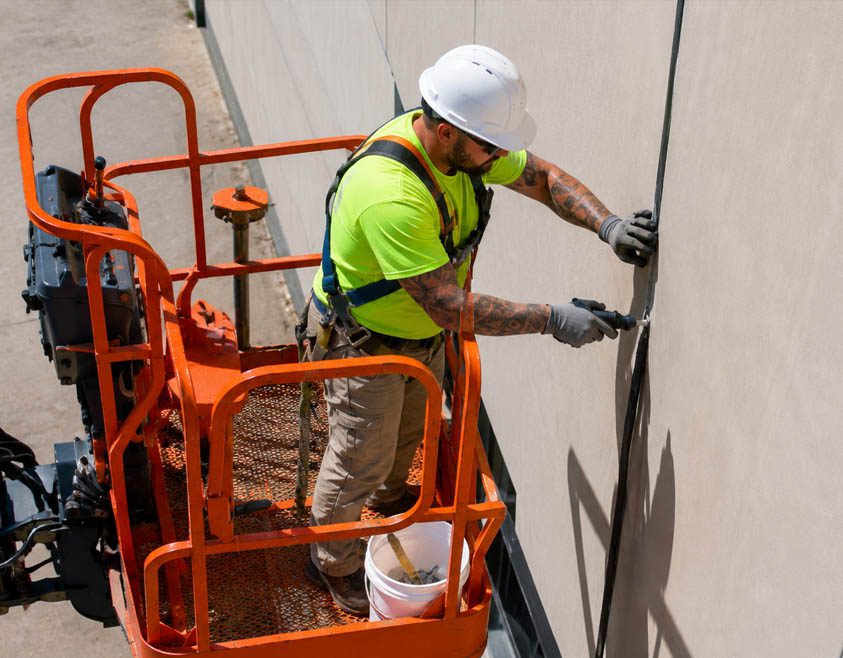
Our commercial and industrial expansion joint replacement service restores structural integrity and prevents costly water damage by swapping out degraded, cracked, or failing joint seals with high-performance, flexible sealants. Over time, heavy traffic, shifting structures, and intense weather break down existing joints, leaving your building vulnerable to concrete spalling (chipping), structural moving pains, and moisture ingress.

Service Area: South-East Queensland and Northern NSW
(Brisbane, Gold Coast, Ipswich, Moreton Bay, Redland City and surrounding regions)

industrial Expansion Joint Replacement

Commercial or industrial expansion joints play a critical role in protecting concrete slabs, warehouse floors, loading docks, manufacturing facilities, and heavy-duty infrastructure from movement caused by temperature fluctuations, vibration, and operational stresses. When expansion joints become cracked, deteriorated, or fail completely, they can lead to water ingress, safety hazards, and costly downtime.

Our concrete expansion joint repairs restore structural integrity to your concrete surfaces using durable, high-performance joint systems designed for demanding environments. We work across a wide range of industrial facilities, including factories, warehouses, processing plants, distribution centres, and commercial complexes.
By replacing failing expansion joints before major concrete deterioration occurs, businesses can extend the lifespan of their assets, reduce maintenance costs, and improve workplace safety.

Why industrial Clients Choose SealTech Industries?

Industrial-Scale Expertise

We provide concrete expansion joint repair and replacement solutions for commercial, industrial, and civil concrete structures. Our systems are designed to manage concrete movement while maintaining performance under demanding conditions.

Specification-Driven Installations

All concrete joint replacement works are completed in strict accordance with Australian Standards, project documentation, and manufacturer installation requirements. This ensures consistent quality, compliance, and long-term joint performance.

High-Performance Expansion Joint Systems

We specify semi-rigid polyurea and polyurethane joint fillers (typically Shore A 80–95 hardness range) engineered for load-support applications in Class 1–4 industrial floors.

Controlled Surface Preparation & WHS Compliance

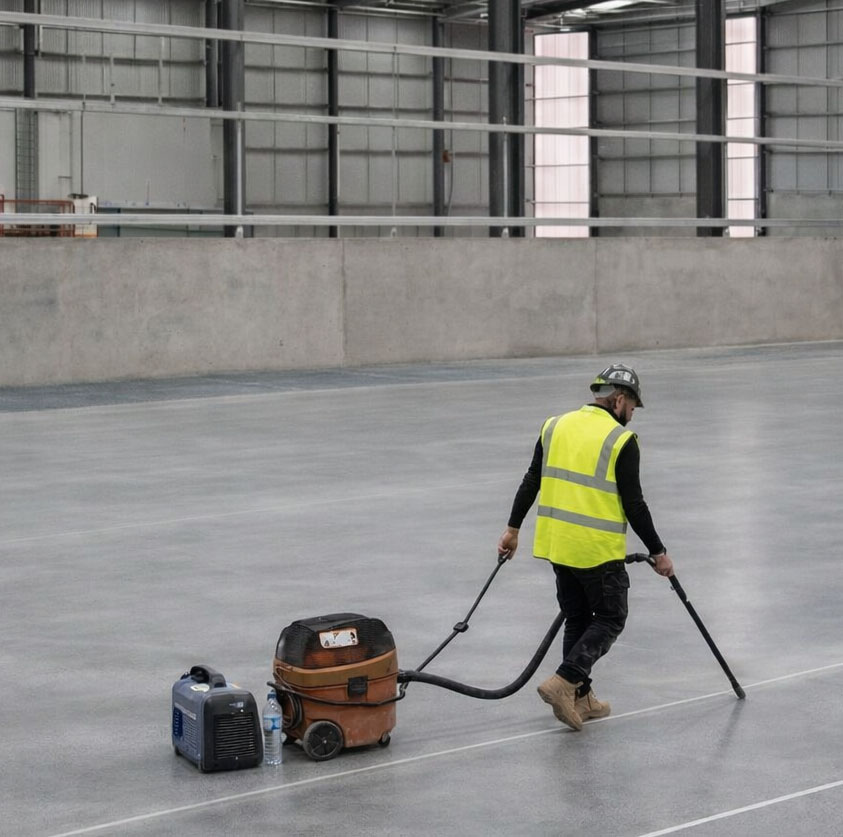
Our preparation process combines precision diamond grinding with vacuum-assisted dust extraction to achieve optimal adhesion and performance. By maintaining strict silica dust controls, we ensure all works comply with Queensland WHS regulations and industry best practices.
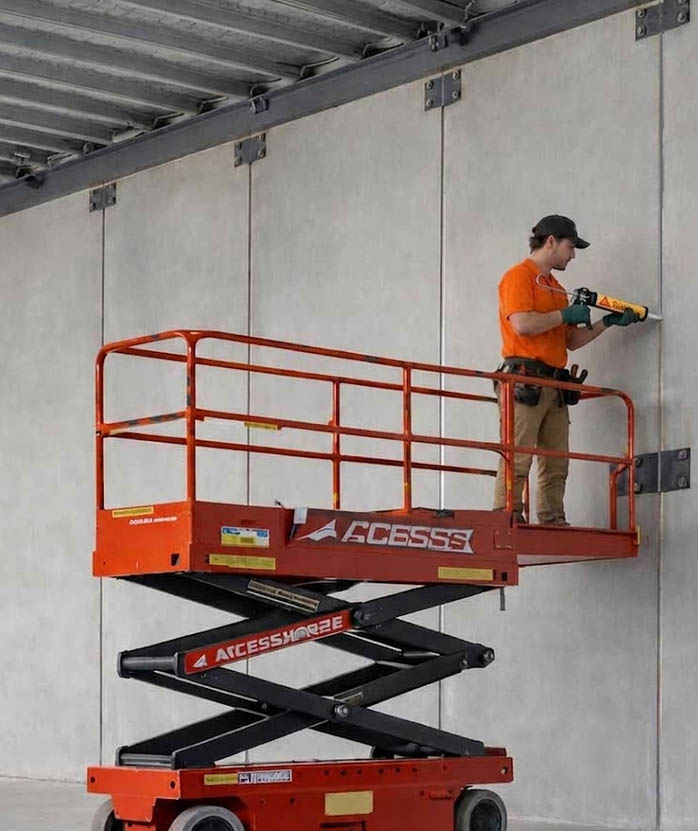
industrial joints replacement

The Technical Execution: Our 4-Step Process

To ensure long-term performance in Queensland’s climate and operating conditions, our industrial and commercial concrete joint replacement follows a disciplined workflow.

Step 1: Preparation & Cleaning

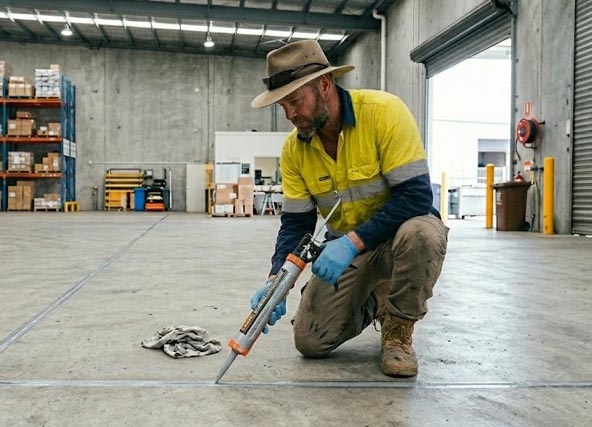
Proper preparation is critical to long-term remedial performance. We use specialised joint-cleaning saws and diamond grinding tools to remove laitance and weak concrete from the full cut depth, ensuring a clean, bond-ready substrate. HEPA-filtered dust extraction supports both surface quality and silica-safe site conditions.
Step 2: Depth Assessment

Expansion joint replacement includes removing failed joint materials and reinstalling to the full saw-cut depth, commonly 25–40mm, to restore edge support under traffic. As these joints act as crack-induction points, backer rod is usually not required. All depths are verified against project specifications and structural design criteria.

Step 3: Precision Material Installation

We deliver compliant, high-performance concrete expansion joint repairs across commercial and civil sectors using calibrated dual-component pumps and approved dispensing systems. By maintaining the manufacturer’s exact mix ratios for semi-rigid polyurea or polyurethane fillers, we guarantee the precise hardness, flexibility, and durability ratings required for high-load industrial environments.

Step 4: Flush Shaving & Finishing

Prevent forklift damage and concrete breakdown with our flush-shaved joint finishing process. Once the filler achieves a controlled initial cure, our team uses specialized floor-shaving razors to cut away excess material, ensuring the joint sits entirely flush with the surrounding concrete slab edges. Removing this uneven vertical lip eliminates the jarring impacts that cause joint spalling.

Pavement Crack & Joint Sealing

INDUSTRIES WE SERVICE

We specialise in high-performance concrete expansion joint replacement—removing damaged or failing joint materials and reinstating full-depth joint systems in commercial, industrial, and infrastructure settings.

Commercial & Retail

Commercial office developments
Retail centres and shopping complexes
Retail distribution spaces

Industrial & Logistics

Industrial warehouses
Distribution centres
Logistics and freight facilities
Manufacturing facilities
Commercial workshops

Public & Institutional

Hospitals and healthcare facilities
Educational institutions
Government and public infrastructure

Parking & Hardstand Infrastructure

Basement and multi-level car parks
Fuel forecourts and hardstand areas
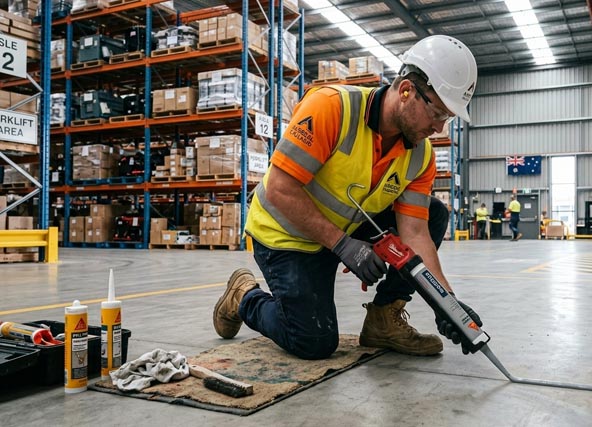
Case Study: Restoring a Failing Warehouse Floor with Expansion Joint Replacement

Background

A large distribution warehouse in Southeast Queensland was experiencing severe expansion joint failure across its concrete floor. Constant forklift traffic, chemical exposure, moisture ingress, and years of wear had caused the original joint materials to deteriorate. Water was beginning to penetrate the slab, creating safety concerns and increasing the risk of reinforcement corrosion.

The Problem

  • Cracked and open joints allowed water and debris to enter.
  • Spalling around joint edges created uneven surfaces for machinery.
  • Moisture ingress increased the risk of steel reinforcement corrosion.
  • Delaying repairs increased the likelihood of costly operational downtime.

The Solution: Concrete Expansion Joint Maintenance

The expansion joint replacement process included:

Assessment & Planning – Failed joints were identified and priority repair areas were mapped.

Removal of Failed Materials – Damaged and deteriorated joint materials were removed.

Joint Cleaning & Preparation – Joints were cleaned and prepared to create a strong bonding surface.

Sealant Installation – A high-performance polyurethane sealant was installed for flexibility, durability, and chemical resistance.

Finishing & Quality Checks – Joints were finished flush with the floor surface and checked for suitability under forklift traffic.

Results

  • Reinforcement was protected from corrosion risk.
  • Floor safety improved through smoother, sealed joints.
  • Repairs were staged to reduce operational disruption.

In Southeast Queensland’s humid and high-rainfall conditions, timely expansion joint maintenance helps protect industrial concrete floors from accelerated deterioration caused by water, chemicals, and heavy traffic.

Building Excellence, One Project at a Time

Name

Latest Industrial Project

COMPLIANCES​

Completed in accordance with AS 3600, AS 4654 (where applicable), project specifications and manufacturer technical data sheets.

Where Every Seal Tells the Story

our projects

All industrial expansion joint maintenance works are carried out in strict accordance with project documentation, manufacturer technical data, and relevant Australian Standards.

Request a Site Inspection

Book a professional expansion joint contractor to assess the condition of your facility across Brisbane, the Gold Coast, Ipswich, or Moreton Bay.

SealTech Industries provides technical evaluation and specification-based recommendations aligned to commercial performance standards.

FREQUENTLY ASKED QUESTIONS?

Will operations need to stop during concrete expansion joint maintenance?
No, operations generally do not need to come to a complete standstill during concrete expansion joint maintenance. Because we utilize fast-curing, semi-rigid polyurea or heavy-duty polyurethane fillers, the downtime for any treated area is drastically reduced compared to traditional sealants. Polyurea fillers, for instance, can often accept heavy forklift traffic within an hour or two of application.

The time it takes to complete an expansion joint repair or replacement depends on the linear meterage, the condition of the existing joints, and the specific material used. However, because industrial-grade projects utilize highly efficient installation methods, a standard project is often completed much faster than expected.

Here is a breakdown of what determines the timeline:

1. Daily Installation Output
Using calibrated dual-component pumps, a professional crew can typically prep, inject, shave, and finish between 150 to 300+ linear meters of joint per day.

Preparation (The longest step): Old, failing sealant must be meticulously raked out, and the concrete edges must be cleaned and prepped.

Dispensing & Shaving: The dual-component pump applies the filler rapidly, and once it hits a controlled initial cure, it is shaved flush immediately.

2. Curing Time & Traffic Readiness
The choice of filler is the biggest factor in how quickly your floor can return to full service:

Semi-Rigid Polyurea: This is the industry standard for fast turnaround. It achieves an initial cure rapidly, allowing it to be flush-shaved almost immediately. It can typically accept heavy forklift traffic within 60 to 90 minutes of application.

Polyurethane Fillers: These offer excellent flexibility but require a longer curing window, often needing 24 hours before they can handle heavy commercial or civil traffic.

3. Project Scope Examples
Small Loading Dock or Threshold (10–50 meters): Can easily be completed in a single morning or afternoon, with traffic resuming a couple of hours later.

Standard Warehouse Floor Rehabilitation (200–500 meters): Typically takes 1 to 2 days on-site. Work is usually phased in sections so your operations can simply route around the active work zone.

Typically 5–10+ years depending on traffic, environment, and material selection.
A contractor will usually need to inspect the joint condition, measure the length and width of the affected areas, assess concrete edge damage, and confirm site access requirements before providing a quote.


A: No, a complete operational shutdown is rarely necessary. By using fast-curing semi-rigid polyurea fillers, the downtime for any treated section is minimized. To keep your facility running smoothly, we typically implement the following strategies:

Phased Sectioning: We divide your floor into strategic zones or traffic lanes, completing one section while your team routes wheeled traffic through another.

Off-Peak Scheduling: Work can be scheduled during night shifts, weekends, or plant shutdowns to eliminate daytime disruption.

Immediate Shaving: Because the joint filler is shaved perfectly flush with the concrete slab edges immediately after a controlled initial cure, there is no waiting for an uneven edge to settle—once cured, it is instantly traffic-ready.

When should concrete expansion joint maintenance be carried out?
A practical schedule is to inspect expansion joints every 6–12 months, or more frequently in high-traffic industrial areas. Maintenance should be completed promptly once early signs of failure appear, because delaying repairs can lead to wider concrete damage and more expensive replacement work.

Most reputable joint sealing contractors offer:

  • Condition assessments
  • Leak investigations
  • Maintenance recommendations


SealTech Industries — Offers free joint sealing inspections for commercial and industrial facilities in Brisbane, Gold Coast, Ipswich, and Moreton Bay.

These services help identify issues early and plan remediation works efficiently.

Standard caulking typically utilizes highly flexible, low-modulus silicone or polyurethane sealants designed purely to keep water out of low-impact areas.

Conversely, industrial expansion joint replacement requires high-performance, semi-rigid polyurea or heavy-duty polyurethane fillers. These specialized materials are injected using calibrated dual-component pumps to achieve a precise hardness rating.

This ensures the joint filler is rigid enough to support the weight of heavy machinery passing over it, protecting the slab edges from chipping while remaining flexible enough to handle natural thermal expansion and contraction.

Failed joints can allow water, dirt, and chemicals into the concrete slab. Over time, this can lead to spalling, cracking, uneven surfaces, trip hazards, equipment damage, and more expensive floor repairs.

Brisbane

  • Ascot
  • Hamilton
  • New Farm
  • Teneriffe
  • Paddington
  • Bulimba
  • Bardon
  • Wilston
  • Highgate Hill
  • Indooroopilly

Gold Coast

  • Mermaid Beach
  • Broadbeach Waters
  • Burleigh Heads
  • Hope Island
  • Sanctuary Cove
  • Currumbin
  • Palm Beach
  • Varsity Lakes
  • Robina
  • Surfers Paradise

Ipswich

  • Springfield Lakes
  • Brookwater
  • Ripley
  • Brassall
  • Yamanto
  • Redbank Plains
  • Goodna
  • Bellbird Park
  • Augustine Heights
  • Raceview

Logan

  • Shailer Park
  • Daisy Hill
  • Cornubia
  • Springwood
  • Rochedale South
  • Loganholme
  • Beenleigh
  • Waterford
  • Meadowbrook
  • Park Ridge

Redland City

  • Wellington Point
  • Cleveland
  • Ormiston
  • Raby Bay
  • Birkdale
  • Thornlands
  • Capalaba
  • Victoria Point
  • Redland Bay
  • Mount Cotton