
Best Practices for Designing a Concrete Joint Waterproofing System
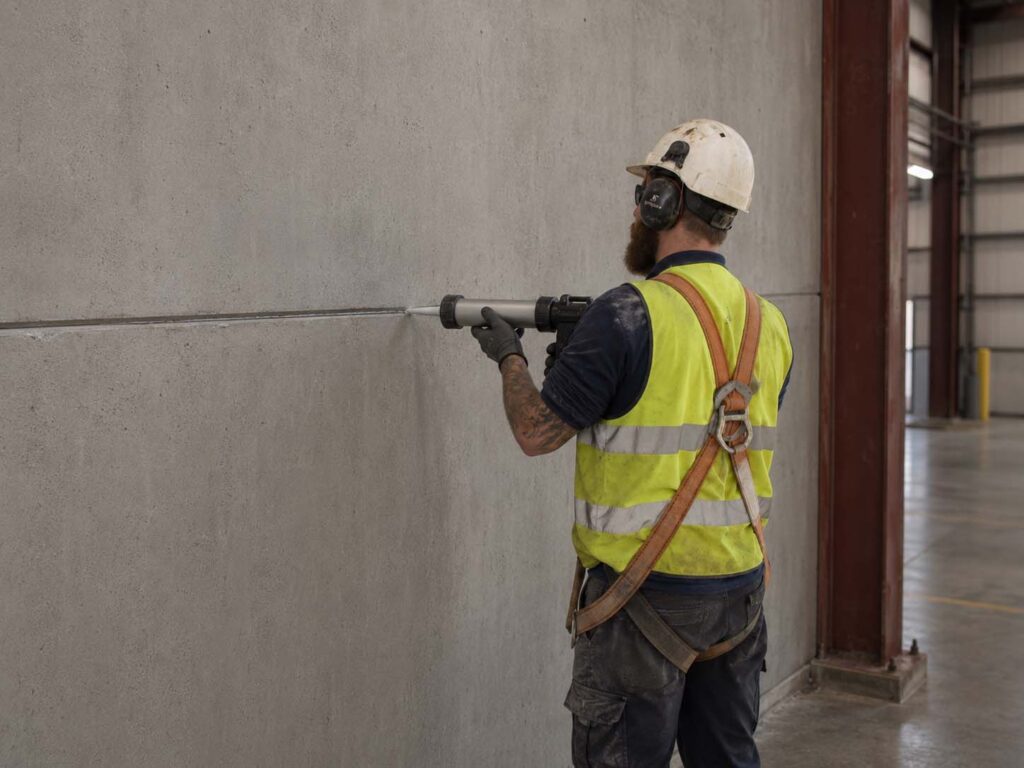
A well-designed concrete joint waterproofing system prevents leaks, protects structural integrity, and extends the life of concrete structures. Because concrete joints move due to shrinkage, temperature changes, settlement, and structural movement, choosing the right waterproofing solution is essential.
1. Identify the Joint Type
Different joints require different waterproofing methods.
| Joint Type | Primary Purpose | Movement Profile | Common Locations | Waterproofing Methods & Key Materials |
| Control / Contraction Joints | Dictates where concrete will crack during drying shrinkage, creating a neat plane of weakness to prevent random surface cracking. | Low (Minor opening and closing due to minor temperature shifts) | Driveways, sidewalks, internal slab-on-ground floors, and pavements. | Top-down elastomeric surface sealing.
• Materials: Closed-cell PE backer rod, high-performance polyurethane sealants, or semi-rigid polyurea joint fillers (for heavy wheel-traffic support). |
| Expansion / Isolation Joints | Completely isolates structural elements to absorb thermal expansion, vibration, structural load transfers, and differential settlement without cracking surrounding concrete. | High (Dynamic, multi-directional expansion, contraction, and shear shift) | Connections between slabs and retaining walls/columns, bridge decks, long floor spans, and building boundary interfaces. | Continuous dynamic barrier systems.
• Materials: Impregnated fiberboard/closed-cell PE foam joint fillers, high-elongation elastomeric sealants, heavy-duty ribbed rubber/PVC waterstops, and hypalon/elastomeric expansion joint tape systems. |
| Construction / Cold Joints | Formed when fresh concrete is placed against previously hardened concrete, accommodating daily pour limits or unexpected construction interruptions. | None (Intended to act as a monolithic, static connection) | Wall-to-footing junctions, slab pour stops, elevator pits, retaining walls, and subterranean structures. | Internal waterstops, crystalline bonding layers, and injection systems.
• Materials: Hydrophilic (sodium bentonite/rubber) swellable waterstops, central bulb PVC waterstops, crystalline slurry coatings/admixtures, and expanding polyurethane/epoxy resin injection hoses. |
2. Use a Multi-Layered Waterproofing System
The best concrete joint sealing and waterproofing systems combine multiple layers of protection.
Internal Waterstops
- Expansion joints: Use flexible PVC or rubber waterstops with a centre bulb to accommodate movement.
- Construction joints: Install hydrophilic waterstops that expand when exposed to water, sealing potential leaks.
- Remedial systems: Concrete injection process allow polyurethane or acrylic resins to be injected if leaks develop later.
Surface Sealants
Apply a high-quality polyurethane or silicone sealant with the correct joint geometry. Use a backing rod or bond-breaker tape to prevent three-sided adhesion, allowing the sealant to stretch as the joint moves.
3. Prepare the Surface Properly
The Success of waterproofing concrete joints depends on good surface preparation.
- Clean joint faces thoroughly and remove dust, laitance, curing compounds, and contaminants.
- Ensure concrete is properly cured and dry unless using moisture-tolerant products.
- Prime joint surfaces to improve sealant adhesion, particularly in high-moisture environments.
4. Ensure Waterproofing Material Compatibility
Primers, sealants, backing rods, membranes, adhesives, waterstops, and protective coatings must be chemically and physically compatible. Where possible, the complete joint waterproofing system should be sourced from one manufacturer and installed in accordance with its technical data sheets.
5. Design for Redundancy and Maintenance
High-risk joints should incorporate more than one waterproofing barrier. For example, an internal waterstop may be combined with an external membrane or accessible surface seal.
The best concrete slab joint waterproofing design must also allow future inspection, joint maintenance, repair, and replacement. Commercial and industrial concrete joint waterproofing systems should be specified and installed by QBCC -licensed waterproofing professionals in accordance with project documentation, manufacturer requirements, and applicable Australian Standards.
Latest post
- Why You Must Calculate Movement Capability Before Sealing Industrial Concrete July 9, 2026
- Sealing Concrete Joints for High-Rise Commercial Buildings: Managing Extreme Thermal Movement July 8, 2026
- How SealTech’s Silicone Waterproofing Meets Strict Building Codes June 4, 2026
- Why Filling in Expansion Joints in Concrete Requires Dust-Controlled Cutting for Commercial Sites May 27, 2026
- Vertical Expansion Joints and QBCC Licensing: Why Hiring Unlicensed Caulkers Voids Your Warranties May 26, 2026
- How to Choose the Right Strata Caulking Contractors for High-Rise Facades May 20, 2026
- What to Look for Before Committing to Caulking High-Rise Building Repairs? May 6, 2026
- Questions to Ask Before Hiring Silicone Installers or Professional Silicone Appliers (To Avoid Leaks & Mold) May 5, 2026
- How to Stop Render Cracking Permanently with Expansion Joints April 27, 2026
- Our External Joint Sealing Solutions That Cut Maintenance Costs April 21, 2026
SealTech Industries
Expert joint sealing & waterproofing solutions for Southeast Queensland.
Contact Us