
What is Lateral Joint Sealing System?
A Lateral Joint Sealing System refers to a waterproofing solution used to seal construction joints, movement joints, or cracks in concrete structures—particularly where water ingress is likely under lateral (sideways) pressure.
Core Concept
Unlike surface coatings, lateral joint sealing systems are designed to intercept and block water traveling through or along a joint, especially when water pressure is pushing from the side (e.g., groundwater against basement walls, tunnels, retaining structures).
Where It’s Used
You’ll typically see these systems in:
- Basements and below-grade walls
- Tunnels and underground infrastructure
- Water tanks and reservoirs
- Retaining walls
- Concrete slabs with construction joints
How It Works
The system creates a continuous barrier across the joint that:
- Accommodates movement (expansion/contraction of concrete)
- Prevents water migration through the joint
- Maintains adhesion under pressure
Common Types of Lateral Joint Sealing Systems
1. Waterstops
- Installed within the concrete joint during pouring
- Made from PVC, rubber, or hydrophilic materials
- Expand or physically block water paths
2. Hydrophilic Strips
- Swell when exposed to water
- Fill gaps within joints to stop leaks
3. Injection Systems
- Use polyurethane (PU) or epoxy resins
- Injected into cracks/joints to seal from inside
- Effective for remedial (post-construction) work
4. Joint Sealants (Surface-Applied)
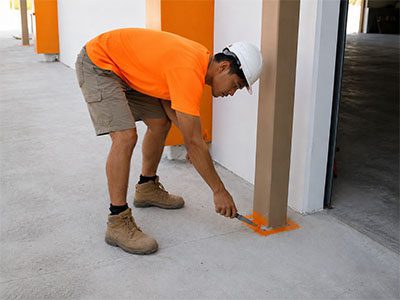 Flexible sealants like polyurethane or polysulfide
- Applied externally but often part of a broader system
We addresses these challenges through a combination of advanced materials, precise installation techniques, and engineering-driven practices. Our approach ensures that lateral joint sealing systems deliver consistent, long-term performance across a wide range of applications.
Core Strategies SealTech Uses
High‑Performance Sealants
- Polyurethane and hybrid silicone formulations with ±25–50% movement capability.
- Resistant to abrasion, UV, and chemical exposure — critical for industrial floors, driveways, and warehouse joints.
Joint Design & Preparation
SealTech’s long-term performance story is also about joint design geometry. The sealants last longer when the bead is proportioned correctly—often around a 2:1 width-to-depth ratio for smaller joints—and warns that poorly designed, overly deep sealant beads are more likely to tear under movement. This matters especially in lateral movement joints, where the seal must behave elastically over many cycles rather than lock up and fail
- Correct width‑to‑depth ratios (typically 2:1) to maximize flexibility.
- Use of backer rods and primers to prevent three‑sided adhesion and ensure strong bonding.
- Rigorous surface cleaning to eliminate dust, laitance, and moisture before application.
SealTech installs closed-cell polyethylene backer rod to control sealant depth, support tooling, and act as a bond breaker. The three-sided adhesion may causes premature tearing that is why correct backer rod installation helps the sealant flex properly as the joint opens and closes. That is one of the clearest technical reasons its system is intended to last in movement-heavy joints
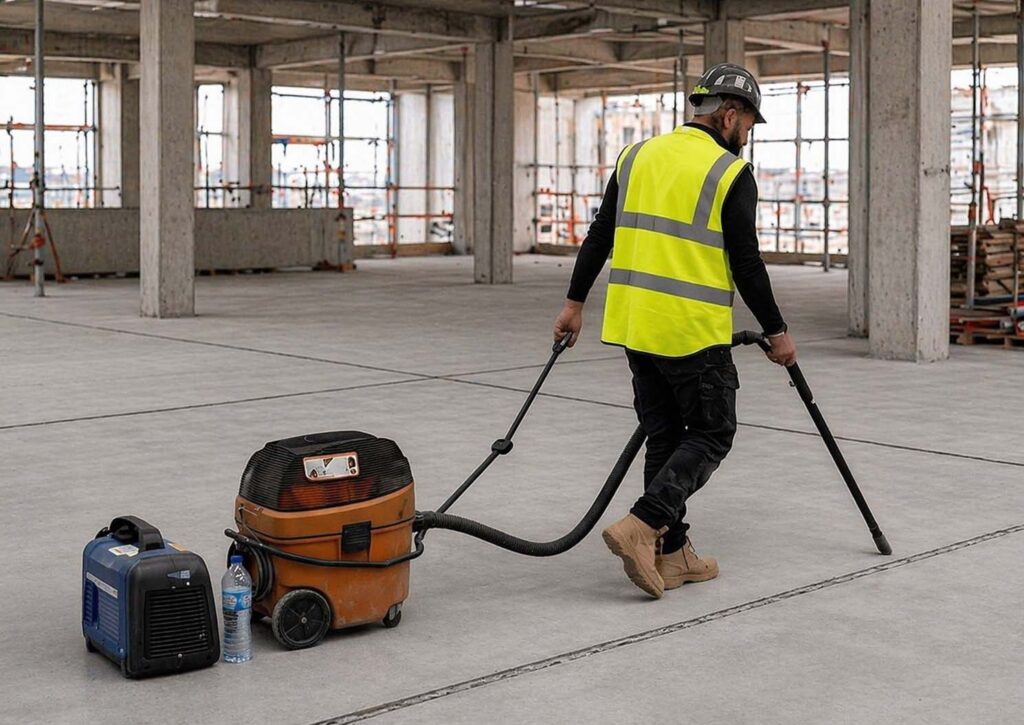
Our professional concrete caulking company uses diamond grinding, vacuum-shrouded cutting, and other dust-controlled preparation methods to create clean bonding surfaces and improve sealant adhesion.
Environmental Adaptation
Systems tailored for humid coastal climates like Brisbane and the Gold Coast.
- Sealants selected for resistance to hydrostatic pressure, salt air, and thermal cycling.
Quality Assurance & Compliance
SealTech presents compliance as part of performance, not paperwork. Our work is aligned with manufacturer technical data sheets, project specifications, and relevant standards such as AS 1859.1, AS 3600, and, where applicable, AS 4654. It also highlights NCC alignment, QBCC licensing, documentation-backed QA, and site-specific safety controls. In practice, that means the joint system is installed the way the product is meant to perform, which reduces early failure risk
- Installation aligned with Australian Standards (AS 3799, AS 4020) for sealants and waterproofing.
- On‑site testing for adhesion, curing, and performance under simulated load conditions.
- Documentation and warranties that reinforce long‑term reliability.
We treats remedial joint sealing as a restoration of system performance
For existing failed joints, SealTech emphasizes that long‑term results come from a disciplined remedial joint sealing workflow: assess the condition, remove failed material, prepare and prime surfaces, install a new high‑performance sealant, and finish with a thorough inspection. In our warehouse project, this approach is perfectly suited to eliminating water ingress, protecting reinforcement, reducing hazards, and minimizing downtime.
Lifecycle Performance Focus
- SealTech emphasizes preventive sealing to avoid costly refurbishments.
- Our concrete joint sealing systems are designed to last decades, reducing maintenance cycles and protecting structural integrity.
Why It Works
- Movement Accommodation: Sealants are chosen and applied to flex with structural shifts, preventing cracks and water ingress.
- Durability Under Load: Industrial‑grade materials withstand forklifts, vehicles, and heavy machinery traffic.
- Regional Relevance: Solutions are optimized for Southeast Queensland’s climate, ensuring joints remain watertight despite humidity and temperature swings.
Practical Takeaway
SealTech’s lateral joint sealing systems are not just a protective measure — they’re a long‑term investment in structural health. By combining engineering precision, material science, and regional expertise, they deliver sealing solutions that keep warehouses, parking garages, and driveways compliant, safe, and dry for years.