
Sealing Concrete Joints for High-Rise Commercial Buildings: Managing Extreme Thermal Movement
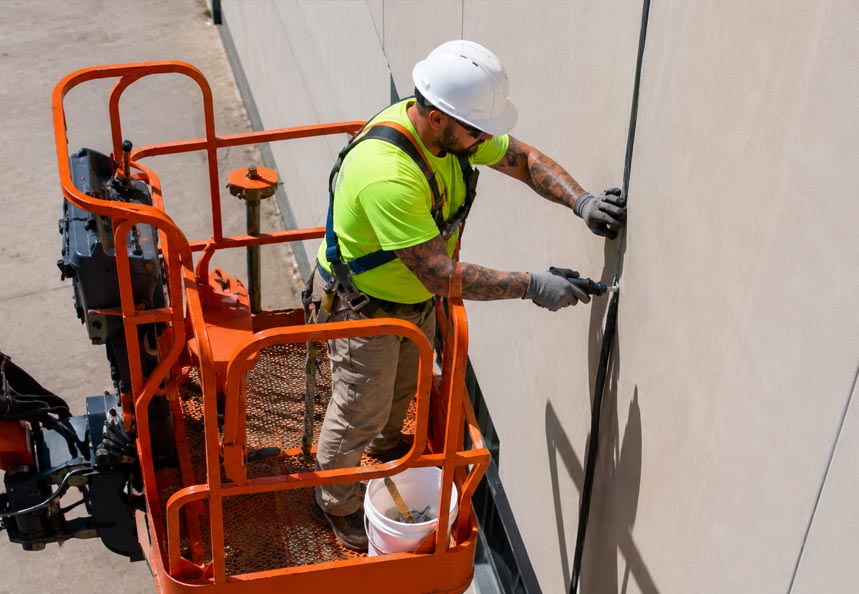
Why Thermal Movement Matters in High-Rise Joint Sealing
Thermal movement is one of the most important challenges in high-rise commercial construction and maintenance. As external temperatures rise and fall, concrete panels, slabs, façades, and structural elements naturally expand and contract. In tall buildings, this movement is amplified across multiple levels and long joint spans, creating ongoing pressure on sealants and joint systems.
Without the right joint design and system in sealing concrete joints, repeated movement can cause cracks, spalling, failed sealant bonds, and water penetration. Proper concrete joint sealing helps absorb this movement, protect against water ingress, and support the long-term durability and structural integrity of the building.
Strategic Approaches to Managing Movement
To accommodate extreme thermal movement, engineers design specific joint systems that allow sections of the building to move independently without damaging the facade or structure.
In high-rise construction, movement must be managed through purpose-designed joint systems. These joints separate key building sections so they can respond to thermal expansion and contraction without compromising the façade, waterproofing, or structural integrity.
1. Proper Selection of Joint Sealants
Standard caulking won’t cut it for high-rise applications. High-performance elastomeric sealants—primarily silicones and urethanes—are required.
- Silicone Sealants: Offer superior UV resistance and can handle movement capabilities of +100% / -50%. They are ideal for exterior facades where thermal exposure is highest.
- Polyurethane Sealants: Provide excellent adhesion and abrasion resistance, making them perfect for parking decks and pedestrian plazas associated with the commercial tower.
2. Correct Joint Design and Geometry
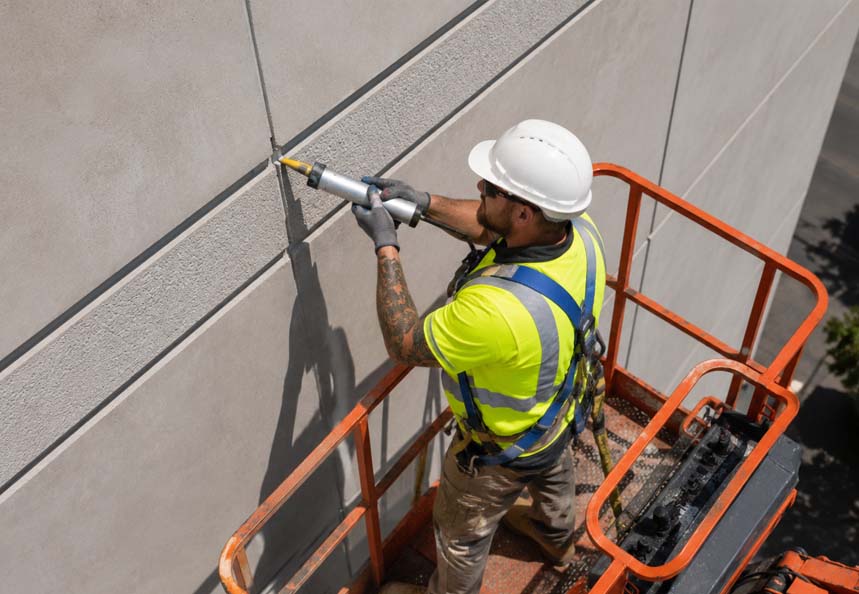
When sealing concrete joints, the geometry of the sealant bead dictates its success. The golden rule for expansion joints is maintaining a proper width-to-depth ratio (typically 2:1 for wider joints).
Backer Rods: A compressible polyethylene or polyurethane backer rod must be inserted into the joint. This controls sealant depth and prevents three-sided adhesion (bonding to the bottom of the joint), which would cause the sealant to tear during thermal expansion.
Tooling: Tooling the sealant ensures complete wetting of the joint substrates, maximizing the bond line.
3. Expansion Joint Covers and Systems
For structural expansion joints that slice through the entire building to isolate movement, standard sealants are paired with heavy-duty mechanical expansion joint covers. These systems use flexible, waterproof membranes combined with architectural metal covers to bridge the gap, ensuring the building remains sealed even during maximum thermal contraction in winter.
Best Practices for Execution
| Phase | Critical Action | Why It Matters |
| Preparation | Mechanical cleaning (sandblasting/grinding) | Removes laitance and form-release agents to ensure maximum adhesion. |
| Priming | Applying substrate-specific primers | Enhances the bond strength, crucial for high-movement joints. |
| Installation | Monitoring ambient temperature during application | Installing sealant during temperature extremes can overstress the material when conditions reverse. |
In high-rise commercial buildings, concrete expansion joint maintenance is an ongoing protection strategy. It demands precise joint design, high-performance materials suited to extreme movement to ensure ageing sealants are replaced before they compromise the building envelope.
Related posts:
- Sealing Concrete Joints for High-Rise Commercial Buildings: Managing Extreme Thermal Movement July 8, 2026
- How SealTech’s Silicone Waterproofing Meets Strict Building Codes June 4, 2026
- Why Filling in Expansion Joints in Concrete Requires Dust-Controlled Cutting for Commercial Sites May 27, 2026
- Vertical Expansion Joints and QBCC Licensing: Why Hiring Unlicensed Caulkers Voids Your Warranties May 26, 2026
- How to Choose the Right Strata Caulking Contractors for High-Rise Facades May 20, 2026
- What to Look for Before Committing to Caulking High-Rise Building Repairs? May 6, 2026
- Questions to Ask Before Hiring Silicone Installers or Professional Silicone Appliers (To Avoid Leaks & Mold) May 5, 2026
- How to Stop Render Cracking Permanently with Expansion Joints April 27, 2026
- Our External Joint Sealing Solutions That Cut Maintenance Costs April 21, 2026
- How SealTech Delivers Long-Term Performance in Lateral Joint Sealing Systems? April 21, 2026
Top Articles
SealTech Industries
Expert joint sealing & waterproofing solutions for Southeast Queensland.
Contact Us