What to Look for Before Committing to Caulking High-Rise Building Repairs?
Maintaining the integrity of a high-rise structure requires more than just routine inspections—it demands proactive measures to prevent water ingress, façade deterioration, and costly long-term damage.
One of the most critical maintenance tasks is caulking high-rise building joints, which ensures waterproofing and structural resilience. Before committing to building caulking repairs, property managers and contractors should carefully evaluate several key factors.
Before signing a contract for caulking high-rise building repairs, audit these five critical areas:
1. The “Material Science” Match
Generic “all-purpose” silicone is the enemy of high-rise longevity.
- Expansion Ratings: Ensure the sealant has a high movement capability (at least ±50%). High-rise buildings “breathe” and shift significantly due to wind loads and thermal expansion.
- Substrate Compatibility: Different materials (concrete, aluminum, glass) require specific primers. Ask: “What primer-sealant combination is being used for our specific facade materials?”
- UV Resistance: At high altitudes, UV radiation is more intense. The material must be rated for extreme UV exposure to prevent chalking or cracking within 24 months.
2. Method of Access & Safety Compliance
The cost of caulking high-rise building repairs is often dominated by how the technicians reach the joints.
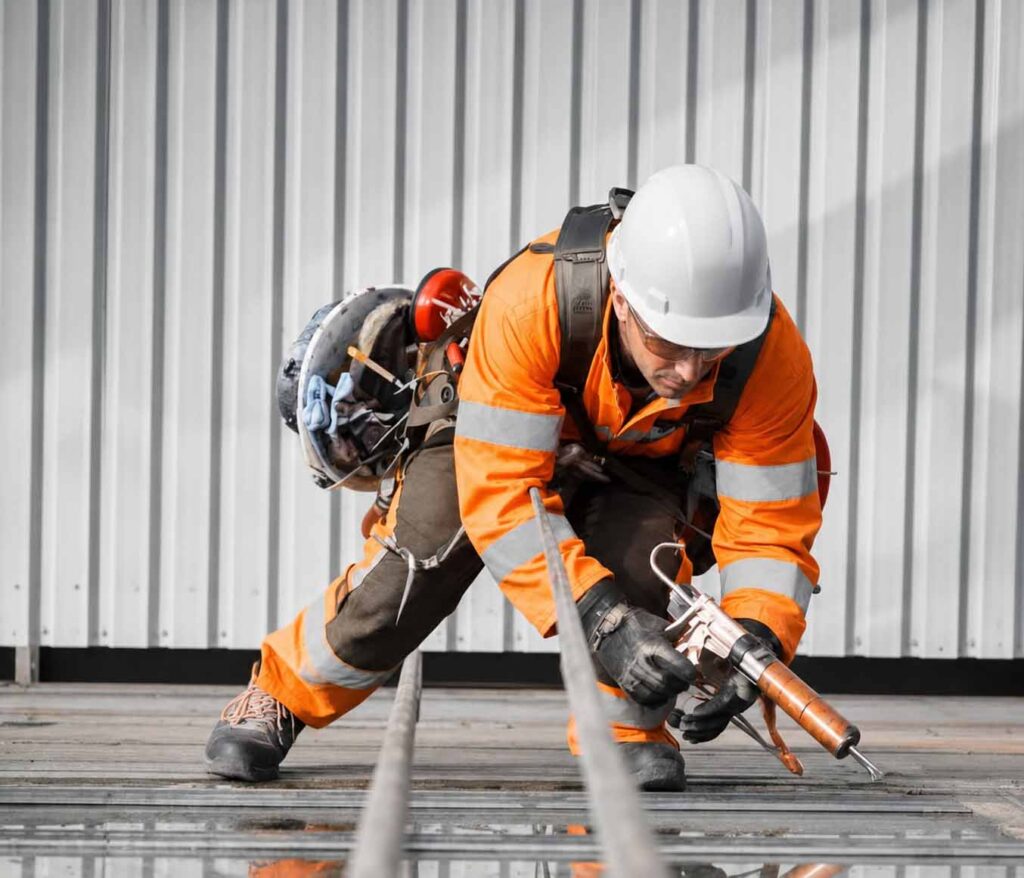
- Rope Access (Industrial Abseiling): Usually the most cost-effective and least disruptive for tenants.
- BMU (Building Maintenance Unit): If your building has a roof crane, is the contractor certified to operate your specific system?
- SWMS & Insurance: Verify their Safe Work Method Statements and ensure they have specific “High-Risk” insurance. Standard public liability often excludes work above a certain height.
3. Surface Preparation Protocol
90% of caulking failures are due to poor preparation, not bad product.
- Mechanical Removal: Are they fully removing the old, degraded sealant, or just “skinning” over the top? (Skinning is a red flag).
- The “Two-Cloth” Clean: They should be using a specific solvent-cleaning method to remove all contaminants before the new bead is laid.
- Bond Breakers: Ask if they use backer rods. A sealant bead must only bond to two sides; if it bonds to the back of the joint (three-point dynamic), it will tear when the building moves.
4. Relevant “Strata” Experience
Caulking high-rise building projects in a strata context require a different “soft skill” set than new construction.
- Communication: How will they notify residents about technicians appearing outside their windows?
- Noise Management: Removal of old sealant often involves mechanical grinders. Will they provide a schedule to manage acoustic disruption for commercial tenants?
5. Documented Testing & Warranty
Don’t settle for a verbal promise of “quality.”
- Pull Testing: A reputable contractor will perform “adhesion-in-place” tests (ASTM C1193 or equivalent) and provide the data.
- Manufacturer’s Warranty: Ensure the warranty covers both labor and materials. Often, material warranties are void if the contractor didn’t follow the manufacturer’s specific application guidelines.
Conclusion
Before committing to any high-rise building caulking project, property managers and strata committees should carefully evaluate the contractor’s materials, access strategy, preparation standards, safety compliance, and warranty coverage.
Professional building caulking and façade waterproofing not only extend the life of the structure but also reduce long-term maintenance costs and protect the value of the asset. In Brisbane’s demanding climate, choosing the right high-rise remedial caulking contractor can make the difference between a lasting repair and a recurring problem.
Related topics:
- Questions to Ask Before Hiring Silicone Installers May 5, 2026
- How to Stop Render Cracking Permanently with Expansion Joints April 27, 2026
- Our External Joint Sealing Solutions That Cut Maintenance Costs April 21, 2026
- How SealTech Delivers Long-Term Performance in Lateral Joint Sealing Systems? April 21, 2026
- Innovations in Construction Joint Sealing Materials and Technology April 15, 2026
- Routine Maintenance to Prevent Water Intrusion Through an Expansion Joint on Concrete Slab April 10, 2026
- Industry Uses and Best Practices of Commercial Caulking & Joint Sealing
Need Professional Caulking High-Rise Building Repairs?
SealTech Industries delivers trusted joint sealing, remedial joint repairs, façade sealing, and high-rise building caulking solutions across the Gold Coast and Southeast Queensland. Protect your property with experienced specialists focused on long-term results.
SealTech Industries
Expert joint sealing & waterproofing solutions for Southeast Queensland.
Contact Us