
Concrete Joint Waterproofing vs. Sealing: How to Choose the Right System
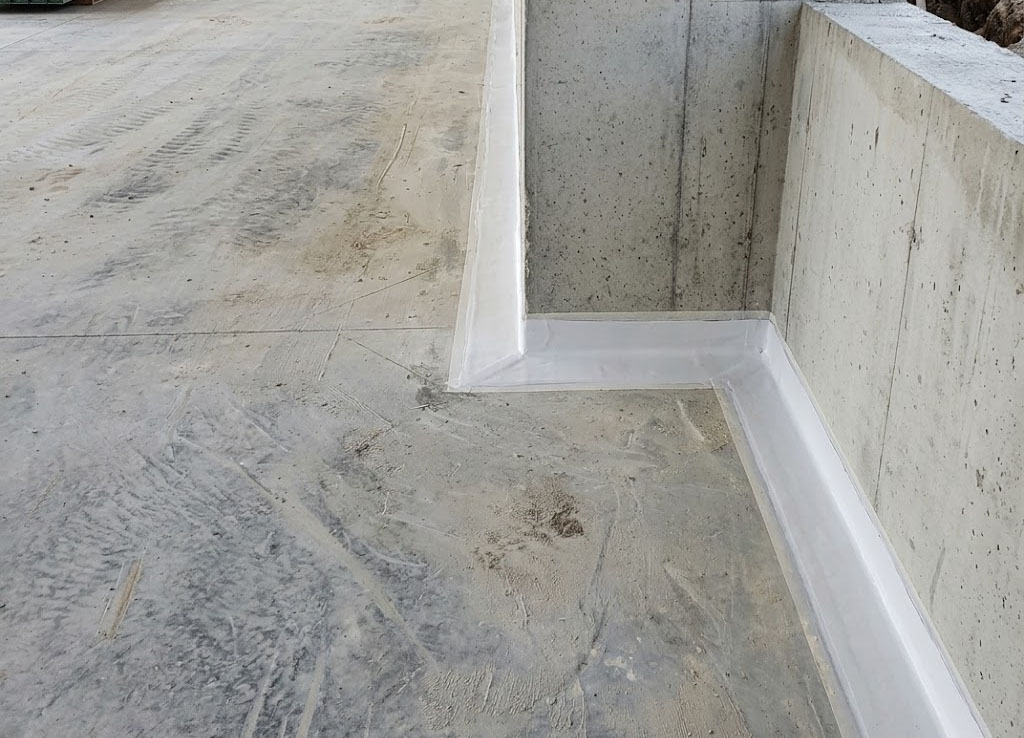
Concrete naturally expands, contracts and moves over time. Engineered joints allow for this movement, help manage structural stresses and make staged concrete pours possible. However, every joint also creates a potential weak point where water can enter the structure.
If a joint isn’t detailed or protected correctly, water ingress can lead to leaks, deterioration, sub-base erosion and costly repairs. This is particularly important in basements, retaining walls, podiums, car parks and other areas exposed to regular moisture or hydrostatic pressure.
Choosing the right system starts with understanding the difference between waterproofing and joint sealing.
- Waterproofing provides a continuous or internal barrier designed to prevent water penetration, including situations where hydrostatic pressure is present.
- Joint sealing generally involves flexible or semi-rigid materials installed at the joint opening. These products help keep out rainwater, dirt and contaminants while allowing the joint to move as designed.
For reliable concrete joint waterproofing, the system needs to suit the type of joint, expected movement, water exposure and traffic conditions.
Concrete joints are broken into a few basic categories based on their purpose and how they’re formed. Here’s an overview:
1. Contraction (Control) Joints
- Purpose: Control where shrinkage cracks form as concrete cures and dries
- Formed by: Saw-cutting, tooling, or inserting joint strips shortly after placement
- Depth: Typically ¼ of slab thickness
- Common in: Slabs-on-grade, pavements, sidewalks, driveways
2. Expansion (Isolation) Joints
- Purpose: Allow concrete to expand and contract with temperature changes without cracking or pushing against adjacent structures
- Formed by: Inserting a compressible filler material (like fiberboard or foam) full-depth
- Common in: Joints between slabs and walls, columns, or other fixed elements; large pavement areas; bridge decks
3. Construction Joints
- Purpose: Mark where concrete placement was stopped and resumed (e.g., end of a work day)
- Formed by: Placing a bulkhead or forming a intentional stopping edge, sometimes with keyways or dowels for load transfer
- Common in: Large pours, walls, slabs poured in sections.
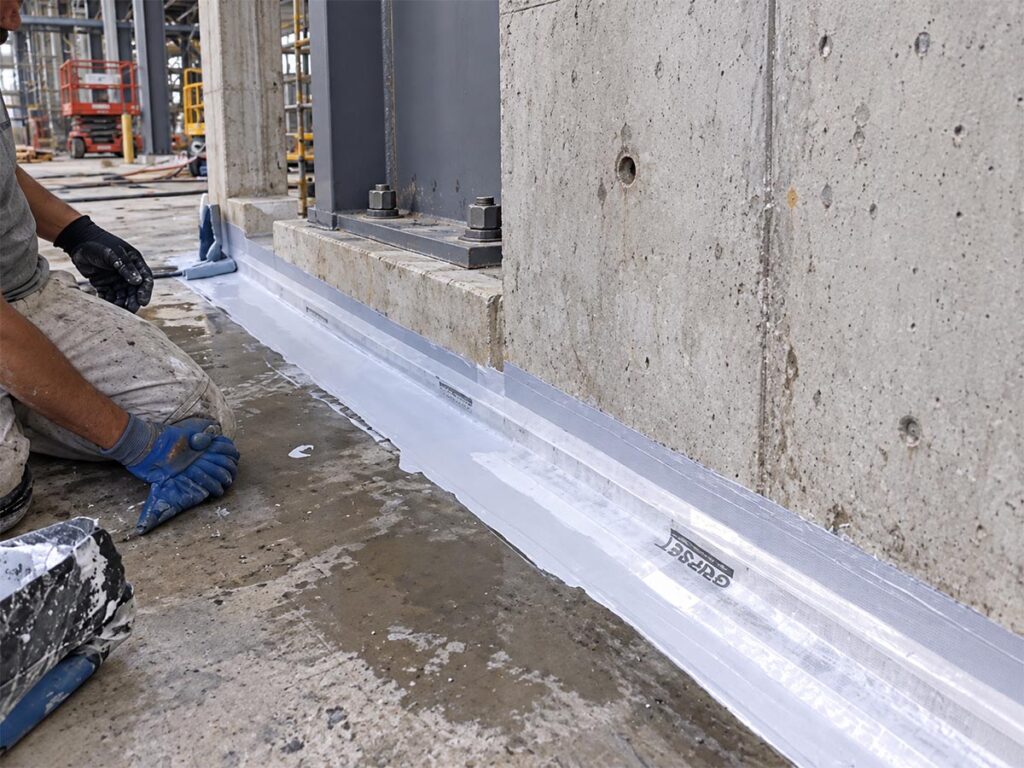
4. Isolation Joints
(sometimes grouped with expansion joints, but functionally distinct)
- Purpose: Completely separate a slab from other structural elements (columns, footings, walls) so they can move independently in all directions
- Formed by: Full-depth separation material around the perimeter of fixed elements
- Common in: Around columns, machine foundations, building perimeters
5. Cold Joints
(technically not a “designed” joint type, but common in practice)
- Occurs when: Fresh concrete is placed against concrete that has already begun to set, without proper bonding
- Considered a defect unless intentionally planned/treated as a construction joint
- Weak point unless treated with bonding agents or roughened surfaces
Need help choosing the right
concrete joint waterproofing system?
Every joint, movement range and exposure condition is different. Our team can help you specify the right solution for your project.
Concrete Joint Waterproofing and Sealing Matrix
| Concrete Joint Type | Primary Protection | Typical Materials Used |
|---|---|---|
| Cold Joint / Construction Joint – Below Grade | Waterproofing | Hydrophilic bentonite strips, PVC waterstops, polyurethane injection and surface mastic installed in a chased groove |
| Cold Joint / Construction Joint – Exposed Above Grade / Slabs | Waterproofing + Joint Sealing | Polyurethane or SMP sealant over backer rod, tie bars and load-transfer dowels |
| Saw-Cut Control Joint – Outdoor Slab | Joint Sealing | Elastomeric polyurethane or silicone sealant with polyethylene backer rod |
| Saw-Cut Control Joint – Industrial Floor | Joint Sealing | Semi-rigid polyurea or epoxy joint filler |
| Isolation Joint – Interior Column / Wall | Joint Sealing | Closed-cell polyethylene foam board, bituminised fibreboard and gun-applied elastomeric sealant |
| Expansion Joint – Basements / Tunnels | Double-Barrier Waterproofing | Centre-bulb PVC/TPO waterstop, closed-cell joint filler and polyurethane elastomeric sealant |
| Expansion Joint – Parking Decks / Podiums | Double-Barrier Waterproofing | Liquid-applied elastomeric waterproofing membrane, preformed joint filler and mechanical expansion joint covers |
| Expansion Joint – Exterior Above-Grade Wall | Joint Sealing + Weather Protection | Polyurethane or silicone sealant, closed-cell PE backer rod and bituminised or foam joint filler |
| Expansion Joint – Interior Wall | Joint Sealing / Aesthetic Protection | Acrylic intumescent sealant where fire-rating is required, flexible foam filler board and architectural expansion joint cover plates |
| Expansion Joint – Below-Grade / Retaining Wall | Double-Barrier Waterproofing | Centre-bulb PVC/TPO waterstop, compatible exterior bandage system, closed-cell foam board and high-movement polyurethane sealant |
Choosing the Right Joint Waterproofing System
There isn’t one product that works for every concrete joint.
A construction joint below ground has very different requirements from a saw-cut joint in an exposed concrete driveway or an expansion joint across a podium deck. The waterproofing specification needs to account for how much the joint will move, whether it is exposed to hydrostatic pressure, its location and the type of traffic or weather it will experience.
Below-grade construction joints are generally designed to remain relatively stable. In these situations, embedded or hydrophilic waterstops can form the primary defense against water ingress. Where an existing joint is already leaking, polyurethane injection may also be used as part of a targeted concrete leak repair system, depending on the cause and condition of the joint.
Movement joints are different. Expansion and isolation joints need to open and close without compromising the seal. Flexible polyurethane or silicone sealants, correctly sized backer rods and compressible joint fillers allow this movement while maintaining protection against moisture and contaminants.
Need help choosing the right joint waterproofing system?
Every joint, movement range and exposure condition is different. Our team can help you specify the right solution for your project.
Related posts:
What Materials Are Used for Concrete Cold Joint Waterproofing
Best Practices for Designing a Concrete Joint Waterproofing System
The Engineer’s Guide to Expansion Joint Waterproofing for Long-Term Structural Protection
Why Filling in Expansion Joints in Concrete Requires Dust-Controlled Cutting for Commercial Sites
Understanding Control Joints in Precast Concrete Walls
SealTech Industries
Expert joint sealing & waterproofing solutions for Southeast Queensland.
Contact Us