
2. Internal Waterstops
I nternal waterstops are installed before the second concrete pour. Part of the waterstop is embedded into the first pour, while the remaining section becomes locked into the next pour, creating a barrier across the joint.
- Hydrophilic Waterstops: These are commonly made from bentonite or water-reactive rubber. When they come into contact with moisture, they expand and press into small gaps and irregularities around the joint, helping prevent water from passing through.
- PVC Waterstops: PVC waterstops are flexible plastic strips with ribbed or shaped profiles. They are positioned across the cold joint to create a continuous physical barrier against water pressure.
- Butyl or Asphaltic Waterstop Strips: These flexible strips are placed directly along the prepared joint surface. Once the next concrete section is poured, the material becomes compressed between the two pours and helps create a watertight seal.
3. Surface-Applied Membranes and Sealants
Surface waterproofing can be added to either the exterior or interior side of the concrete joint. It is commonly used as an additional layer of protection or as part of a repair system for existing structures.
- Crystalline Waterproofing Coatings: These cement-based coatings contain reactive chemicals that work with moisture and components within the concrete to form insoluble crystals. The crystals help block capillary pores and small pathways that could otherwise allow water to move through the joint area.
- Polyurethane and SMP Sealants: Flexible polyurethane and silane-modified polymer sealants can be installed into prepared grooves along the cold joint. Their elasticity allows them to accommodate small amounts of movement while maintaining the seal.
- Liquid-Applied Elastomeric Membranes: Flexible waterproofing membranes, such as polyurethane or polyurea systems, can be applied over the cold joint to create a continuous waterproof layer. In higher-risk areas, reinforcing fabric may also be embedded across the joint to improve durability and crack-bridging performance.
In practice, the most reliable concrete cold joint waterproofing systems often use more than one method. An internal waterstop may provide the primary barrier, while injection systems, sealants or surface membranes provide additional protection where required.
Material Selection Comparison
| Material Category | Best Used For | Key Advantage | Limitation |
| Bentonite / Hydrophilic Strips | New construction wall-to-footing joints | Self-healing via swelling expansion | Requires minimum 50–75mm concrete cover to prevent spalling |
| PVC Ribbed Waterstops | Structural walls subjected to high head pressure | Proven durability; resistant to chemicals | Labor-intensive placement and heat-welded splices |
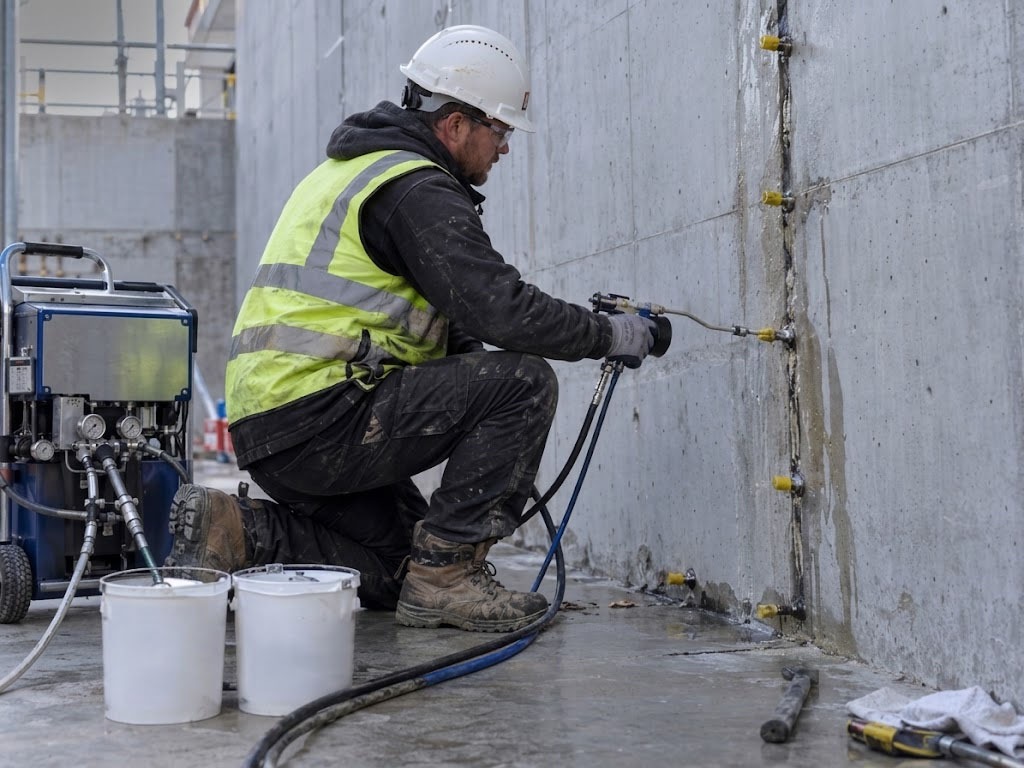
| Polyurethane Injection waterproofing | Active leaks in existing/cured cold joints | Fast set time; expands to fill irregular voids | Requires specialized drilling and high-pressure pumping equipment |
| Crystalline Coatings | Interior (negative side) or exterior surface sealing | Permanent active seal within concrete matrix | Cannot bridge significant joint cracking or dynamic movement |