

Concrete is built to last, but it naturally expands and contracts as temperatures change, moisture levels fluctuate, and heavy loads put pressure on the surface. Expansion joints allow for this movement, helping prevent cracking, spalling, and buckling.
Over time, however, these joints can wear out, lose flexibility, or become damaged. When that happens, choosing the right materials for concrete expansion joint replacement is essential for a long-lasting repair. From foam backer rods to flexible sealants and joint fillers, each material has a specific purpose. Understanding how they work and where they’re best used can help you choose a solution that protects your concrete for years to come.
Why Material Choice Matters
Not all expansion joint materials perform the same way. The right combination depends on several factors, including joint width, expected movement, traffic levels, and exposure to moisture or chemicals. A properly installed expansion joint system typically includes two important components: a compressible filler or backer material inside the joint and a flexible sealant applied over the top.
The filler allows the concrete to move without putting unnecessary pressure on the joint, while the sealant helps keep water, dirt, and other contaminants out.
If either material is missing or unsuitable for the application, the joint may fail sooner than expected. Water can seep beneath the concrete and weaken the supporting ground, while trapped debris can restrict movement and cause the slab edges to chip or crack. This is why selecting compatible materials is just as important as the installation itself.
Foam Options
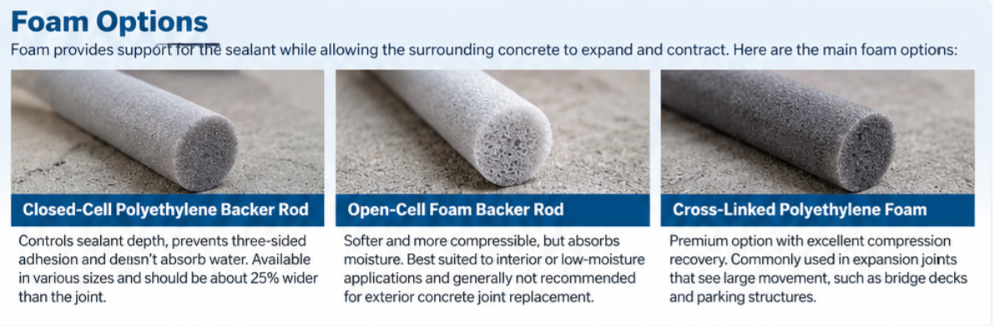
Foam is one of the most commonly used materials in expansion joint systems. It provides support for the sealant while allowing the surrounding concrete to expand and contract.
There are several types available, each suited to different conditions.
- Closed-Cell Polyethylene Backer Rod – Closed-cell polyethylene backer rod is a popular choice for joints that require a flexible sealant. It helps control the depth of the sealant and prevents three-sided adhesion, which can cause the sealant to tear when the concrete moves. Because it doesn’t absorb water, it’s particularly useful for outdoor applications.Backer rods come in different sizes and are generally selected to be around 25% wider than the joint opening. This allows them to fit securely without slipping out of place.
- Open-Cell Foam Backer Rod – Open-cell foam backer rod is softer and easier to compress, making it useful for certain joint configurations. However, it can absorb moisture, which limits where it should be used. It’s generally better suited to interior areas or applications where water exposure is minimal. For outdoor concrete joint replacement, closed-cell alternatives are usually the more practical option.
- Cross-Linked Polyethylene Foam – Cross-linked polyethylene foam offers excellent compression recovery, meaning it can return to its original shape after being compressed. This makes it a suitable choice for joints that experience frequent or significant movement. It’s commonly used in demanding environments such as bridge decks, parking structures, and other areas where long-term flexibility is important.
Filler Board Options
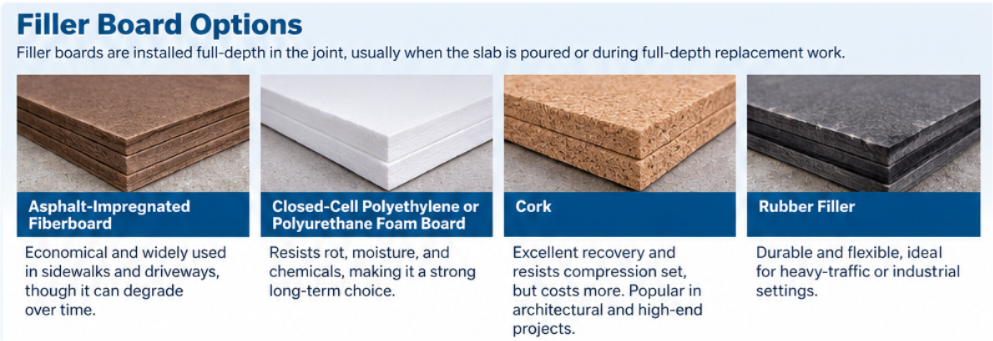
Filler boards are another important part of expansion joint construction. Unlike backer rods, these materials generally extend through the full depth of the joint. They’re commonly installed when concrete is first poured, although they may also be used during full-depth replacement work.
The most common options include:
- Asphalt-impregnated fiberboard: An affordable and widely used material for sidewalks, driveways, and general concrete work. It performs well in many applications but may deteriorate with age and prolonged exposure.
- Closed-cell polyethylene or polyurethane foam board: A durable option that resists moisture, rot, and many chemicals. It’s well suited to projects where long-term performance is a priority.
- Cork: Known for its ability to recover after compression, cork provides reliable movement accommodation. It’s often used in architectural projects and higher-end concrete installations, although it tends to cost more.
- Rubber filler: A tough, flexible material that performs well in industrial environments and areas exposed to heavy traffic.
Choosing the right filler board comes down to how much movement the joint needs to accommodate and the conditions it will face throughout its service life.
Sealant Options
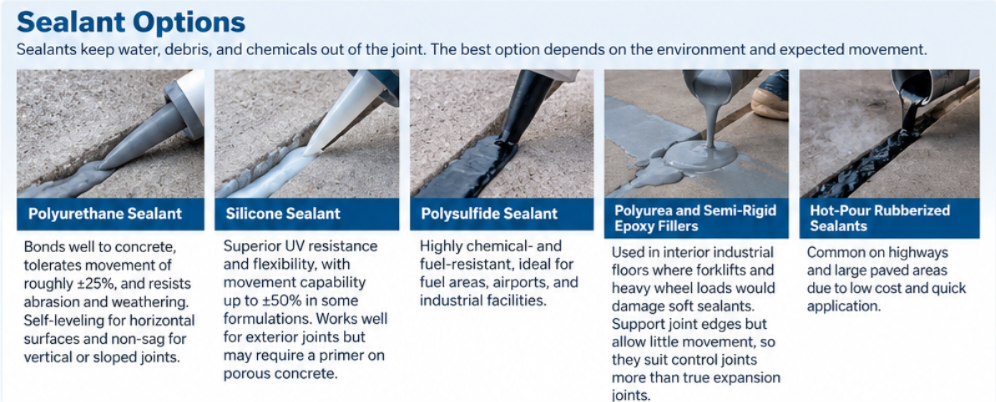
While fillers provide space for movement, sealants protect the joint from water, debris, and other substances that can lead to deterioration. The best sealant depends on whether the joint is indoors or outdoors, how much movement is expected, and the type of traffic or chemical exposure involved.
- Polyurethane Sealant
Polyurethane sealant is one of the most widely used products for concrete expansion joint repair.
It bonds well to concrete, offers good resistance to weathering and abrasion, and can typically accommodate movement of around ±25%, depending on the product.
Self-leveling polyurethane sealants are commonly used on horizontal surfaces such as driveways, footpaths, and warehouse floors.
For vertical joints or sloped surfaces, non-sag formulations are generally more suitable because they stay in place during application.
- Silicone Sealant – Silicone sealant is valued for its flexibility and excellent resistance to UV exposure. Certain formulations can accommodate joint movement of up to ±50%, making them useful where concrete experiences significant expansion and contraction. Silicone is particularly effective for exterior applications exposed to sunlight and changing weather conditions. However, some products require a primer when applied to porous concrete, and not all silicone sealants can be painted or coated afterward.
- Polysulfide Sealant – Polysulfide sealant is designed for environments where resistance to fuels, oils, and chemicals is especially important. It’s commonly used in industrial facilities, airports, and areas where concrete joints may come into contact with petroleum-based substances. For these applications, its chemical resistance can make it a more suitable option than standard joint sealants.
- Polyurea and Semi-Rigid Epoxy Fillers – Polyurea and semi-rigid epoxy fillers are often used in industrial concrete floors that experience regular forklift traffic or heavy wheel loads. These materials help support joint edges and reduce damage caused by repeated traffic. However, they don’t provide the same movement capability as flexible sealants. For this reason, they’re generally better suited to control joints rather than true expansion joints.
- Hot-Pour Rubberized Sealants – Hot-pour rubberized sealants are commonly used for large-scale paving projects, including highways, roads, and expansive concrete surfaces. They provide a cost-effective solution for sealing long sections of joints and can be applied efficiently using specialised equipment. Their suitability depends on the joint design, expected movement, and service conditions.
Matching Materials to the Job
The best expansion joint system isn’t necessarily the most expensive one. It’s the combination of materials that suits the concrete surface and the conditions it experiences
.
| Application | Recommended Materials | Why It Works |
|---|---|---|
| Residential driveways and sidewalks | Closed-cell backer rod with self-leveling polyurethane sealant | A practical and affordable choice for everyday use. |
| Parking decks and commercial plazas | Higher-performance polyurethane or silicone sealants with cross-linked foam | Accommodates greater movement and regular traffic. |
| Industrial sites (chemicals or heavy machinery) | Specialised polysulfide or polyurea systems | The right choice depends on whether the joint is designed for movement or load transfer. |
| Gold Coast properties | Materials rated for regular rainfall, strong UV exposure and moisture | Handles environmental factors, helping reduce premature deterioration and ongoing maintenance. |
Don’t Overlook Preparation
Even high-quality materials won’t perform properly if the joint hasn’t been prepared correctly. Before applying a new sealant, all loose material, deteriorated sealant, dirt, and debris should be removed.
The joint surfaces must also be clean and dry, unless the product manufacturer specifies otherwise. Proper preparation includes checking the condition of the concrete edges, installing the correct backer rod size, and applying primer where required.
Sealant depth is equally important. As a general guide, the sealant depth is often around half the joint width, with a minimum of approximately ¼ inch, although the manufacturer’s specifications should always take priority. Once applied, the sealant should be properly tooled where required to ensure good contact with both sides of the joint. Taking the time to get these details right can make a significant difference to the durability and performance of the finished repair.
Final Thoughts
Choosing the right materials for concrete expansion joint replacement is about more than simply filling a gap. The joint needs to remain flexible, accommodate concrete movement, and protect the surrounding slab from moisture and debris.
Foam backer rods, filler boards, and flexible sealants all play different roles, and the best combination depends on the location, traffic conditions, and expected joint movement.
For smaller areas with minor deterioration, targeted concrete expansion joint repair may be enough to restore the joint’s performance. However, where joints have failed extensively or the surrounding concrete is damaged, a complete replacement may be the better long-term solution.
If you’re unsure which materials are suitable for your project, consulting an experienced concrete or joint sealing company can help you avoid unnecessary repairs and ensure the joints are properly sealed for lasting protection.