
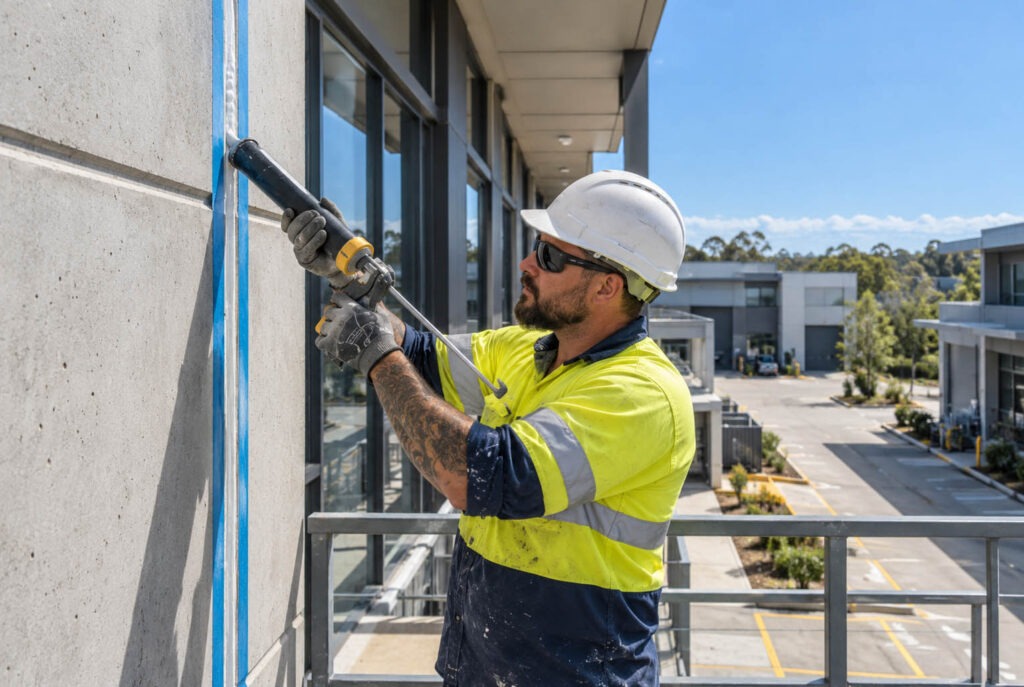
What Causes Water Leakage Through Vertical Construction Joints?
Water leakage commonly occurs when the joint between two concrete pours is inadequately sealed or when the original sealing system deteriorates.
Common causes include:
- Poor surface preparation: Dust, laitance, and contaminants prevent proper sealant adhesion.
- Concrete shrinkage: Shrinkage can create small gaps along the construction joint.
- Failed joint sealants: Ageing, weather exposure, and movement can cause sealants to crack or separate.
- Hydrostatic pressure: Groundwater pressure can force moisture through vulnerable construction joints.
- Incorrect joint sealing materials: Using unsuitable sealants can result in premature failure.
Identifying the underlying cause is essential before beginning any concrete wall joint repair.
How to Properly Seal a Vertical Construction Joint in Concrete Wall
1. Inspect the Joint and Identify the Leakage Source
Before applying any sealant, inspect the vertical construction joint for visible gaps, cracking, moisture penetration, and deteriorated materials.
Determine whether the joint is static or subject to movement. Also assess whether water is entering from the exposed surface or through the full depth of the construction joint. Active water leakage or significant hydrostatic pressure may require specialist treatment before surface sealing.
2. Remove Existing Sealant and Prepare the Surface
Successful vertical concrete joint sealing depends on proper surface preparation.
Remove failed sealant, loose concrete, dirt, and contaminants using suitable mechanical tools. The joint faces should be sound, clean, and prepared according to the sealant manufacturer’s specifications. Where necessary, repair damaged concrete edges before installing the new sealing system.
3. Install Backer Rod and Apply Primer Where Required
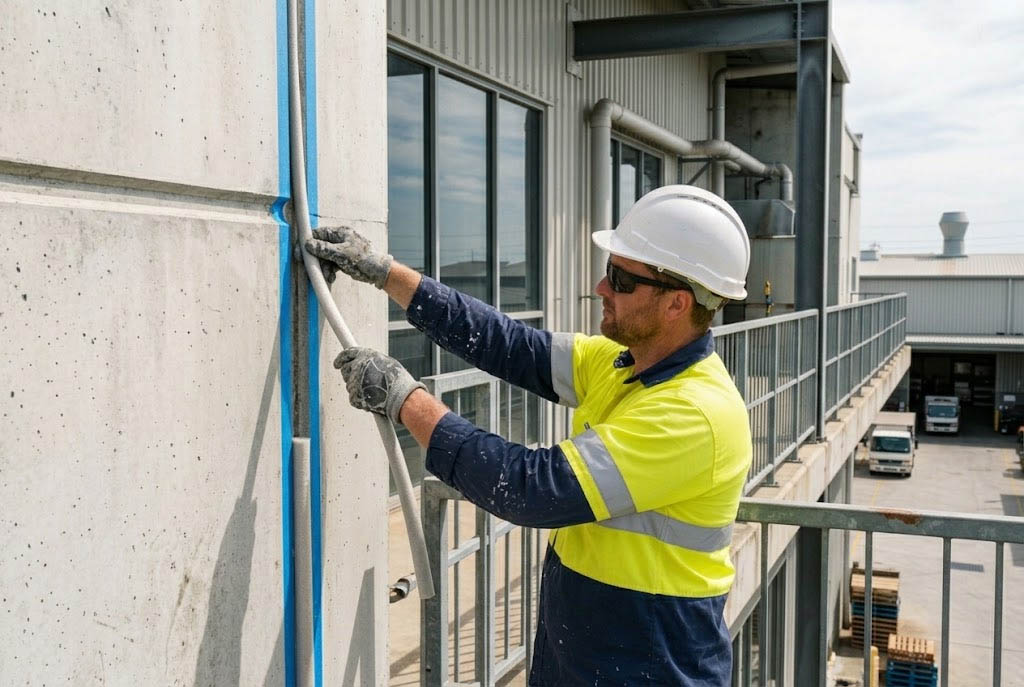
For joints designed to accommodate movement, install a compatible closed-cell backer rod at the appropriate depth.
Backer rods help control sealant depth and prevent unwanted three-sided adhesion, allowing the sealant to perform correctly. Apply a compatible primer when specified by the sealant manufacturer.
4. Apply Polyurethane Joint Sealant
Polyurethane joint sealing is commonly used for suitable vertical concrete joints because polyurethane sealants can provide flexibility, adhesion, and resistance to weather exposure.
Using a professional caulking gun, apply the specified sealant continuously along the prepared joint.
Tool the sealant to achieve proper contact with both joint faces, maintaining the required sealant profile and avoiding trapped air.
The sealant must be suitable for the expected joint movement, exposure conditions, and substrate.
5. Allow Proper Curing and Inspect the Finished Joint
Follow the manufacturer’s curing requirements before exposing the joint to demanding service conditions.
Inspect the completed seal for gaps, poor adhesion, or inconsistent application. Where leakage persists, further investigation may identify defects requiring specialist leaking concrete construction joint repair, including appropriate injection systems or engineered waterproofing treatments.
Why Choose Professional Vertical Concrete Joint Sealing?
Improper sealing can lead to recurring water ingress, repeated repairs, and premature joint failure. Professional joint sealing contractors assess joint conditions, select compatible materials, and apply sealing systems suited to the structure’s requirements.
At SealTech Industries, we provide professional caulking and concrete joint sealing services for commercial, industrial, and civil properties across Brisbane, the Gold Coast, Logan, Ipswich, and surrounding South East Queensland.
Whether your project requires new joint sealing, failed sealant replacement, or targeted concrete wall joint repair, our team can assess the joint and recommend a suitable sealing approach.
Need Professional Concrete Joint Sealing?
Contact SealTech Industries today to discuss professional vertical construction joint sealing and help protect your concrete structures against water penetration.