
Expansion joints are critical components in concrete and masonry structures, allowing for controlled movement caused by temperature fluctuations, seismic activity, or structural loads. To ensure durability and performance, selecting the right sealant for expansion joint maintenance is essential. Among the most widely used options are silicone, polysulfide, and hybrid formulations.
Each has distinct properties, advantages, and limitations that make them suitable for specific applications.
Silicone Sealants
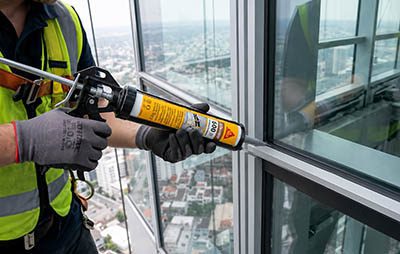
Silicone sealants are known for their exceptional flexibility and UV resistance, making them ideal for outdoor applications. They maintain elasticity across a wide temperature range and resist degradation from sunlight, ozone, and weathering.
Advantages
- Excellent adhesion to glass, metal, and concrete.
- Long service life due to resistance to aging and environmental exposure.
- Superior flexibility accommodates large joint movements.
Limitations
- Lower abrasion resistance compared to other sealants.
- Can be more expensive than alternatives.
- Some formulations may have limited paintability.
Silicone is often the go-to choice for facades, curtain walls, and exterior concrete structures where long-term weather resistance is critical.
Polysulfide Sealants
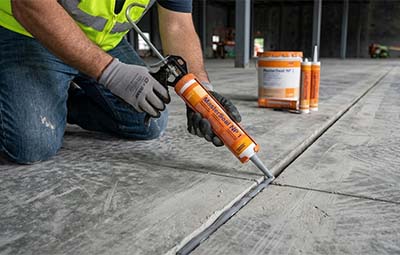
Polysulfide sealants have been widely used in industrial and marine environments due to their chemical resistance and durability. They are particularly effective in areas exposed to fuels, oils, and solvents.
Advantages
- Excellent resistance to chemicals and hydrocarbons.
- Strong adhesion to concrete, masonry, and metals.
- Good balance of flexibility and toughness.
Limitations
- Susceptible to UV degradation if not protected.
- Application can be more labor-intensive.
- Typically shorter lifespan outdoors compared to silicone.
Polysulfide is best suited for airports, fuel storage facilities, and chemical plants, where exposure to aggressive substances is expected.
Hybrid Sealants
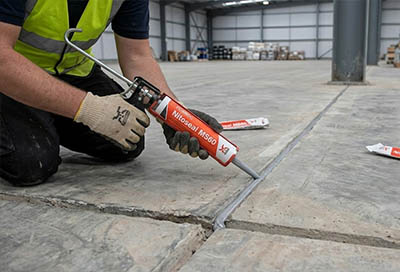
Hybrid sealants combine the strengths of polyurethane and silicone technologies, offering a versatile balance of performance characteristics. They are designed to provide durability, flexibility, and ease of application.
Advantages
- Good adhesion to a wide range of substrates.
- Paintable and compatible with many construction materials.
- Balanced resistance to weathering and chemicals.
Often lower VOC formulations, making them environmentally friendly.
Limitations
- Performance varies depending on manufacturer and formulation.
- May not match silicone’s extreme UV resistance or polysulfide’s chemical resistance.
Hybrids are often chosen for general construction projects, parking structures, and mixed-use facilities, where a cost-effective and adaptable solution is needed.
Comparison Table
| Sealant Type | Best Use Case | Strengths | Weaknesses |
|---|---|---|---|
| Silicone | Exterior facades, curtain walls | UV resistance, flexibility, longevity | Higher cost, limited paintability |
| Polysulfide | Industrial, marine, fuel facilities | Chemical resistance, adhesion | UV sensitivity, shorter outdoor lifespan |
| Hybrid | General construction, parking decks | Versatility, paintability, balanced performance | Variable quality, moderate resistance |
Choosing the Right Sealant for Expansion Joint Maintenance
The choice depends on the environmental conditions, expected joint movement, and budget:
- For long-term exterior durability, silicone is unmatched.
- For chemical-heavy environments, polysulfide is the safer bet.
- For cost-effective versatility, hybrids provide a balanced solution.
Ultimately, proper surface preparation and application techniques are just as important as the sealant itself. Even the best product will fail if not applied correctly.