
SEALTECH INDUSTRIES

Control Joint Filling and Saw-Cut Joint Sealing

Industrial Slab Edge Protection for Commercial & Civil Projects

Service Area: South-East Queensland and Northern NSW
(Brisbane, Gold Coast, Ipswich, Moreton Bay,
Redland City and surrounding regions)

Commercial Control Joint Filling Solutions

Concrete is one of the most durable construction materials available. However, as it cures and undergoes natural shrinkage, controlled cracking is inevitable. Saw-cut control joints are intentionally installed to manage this movement and prevent random cracking.

In high-traffic commercial and industrial environments, these joints must be professionally filled to protect slab edges from impact damage, load stress and premature deterioration.

SealTech Industries delivers specialist control joint filling solutions across Brisbane, Gold Coast, Ipswich and Moreton Bay. Our systems are engineered for durability, load tolerance and long-term asset protection in demanding commercial environments.

Why Commercial Clients Choose SealTech Industries?

Commercial-Scale Expertise

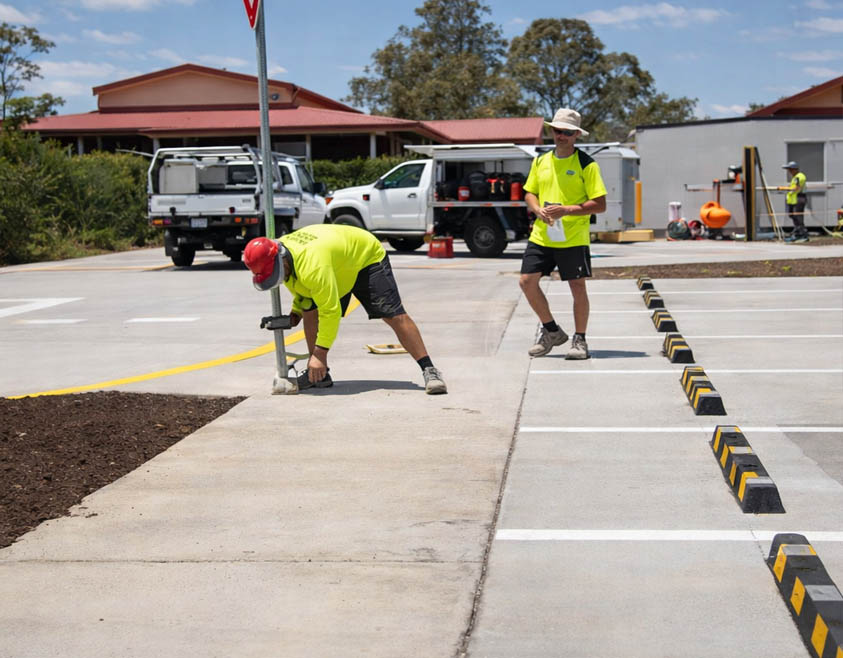
We operate exclusively in commercial, industrial and civil environments. Our systems are designed to withstand high-load traffic including forklifts, pallet movers and heavy vehicle access.

Standards & Specification Compliance

All installations are completed in accordance with Australian Standards, issued-for-construction documentation and manufacturer technical data sheets.

Industrial-Grade Materials

We specify semi-rigid polyurea and polyurethane joint fillers (typically Shore A 80–95 hardness range) engineered for load-support applications in Class 1–4 industrial floors.

Rapid Return to Service

Where project conditions permit, we utilise fast-curing systems that allow areas to return to service within hours, minimising operational downtime.

Dust-Controlled Surface Preparation

All preparation works are conducted using diamond grinding and vacuum-shrouded equipment with compliant dust extraction systems in accordance with Queensland WHS silica regulations

Experienced Technical Applicators

Our technicians bring experience across logistics facilities, infrastructure projects, high-rise developments and heavy-use industrial environments.

The Technical Execution: Our 4-Step Process

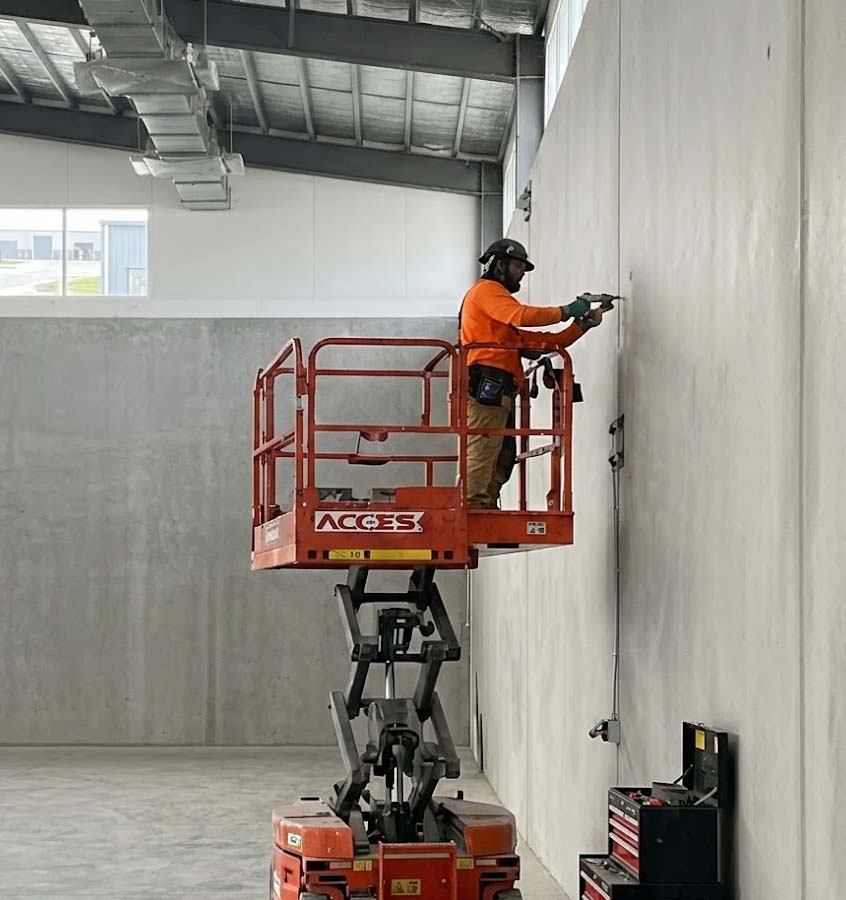
To ensure long-term performance in Queensland’s climate and operating conditions, our installations follow a disciplined workflow.

Step 1: Joint Preparation & Cleaning

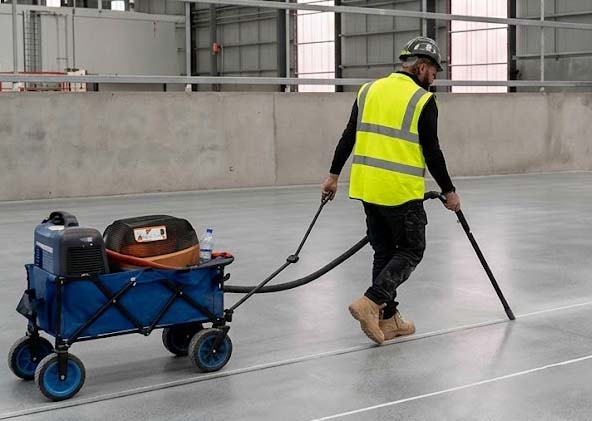
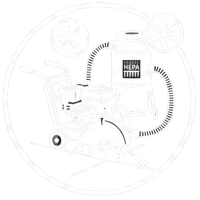
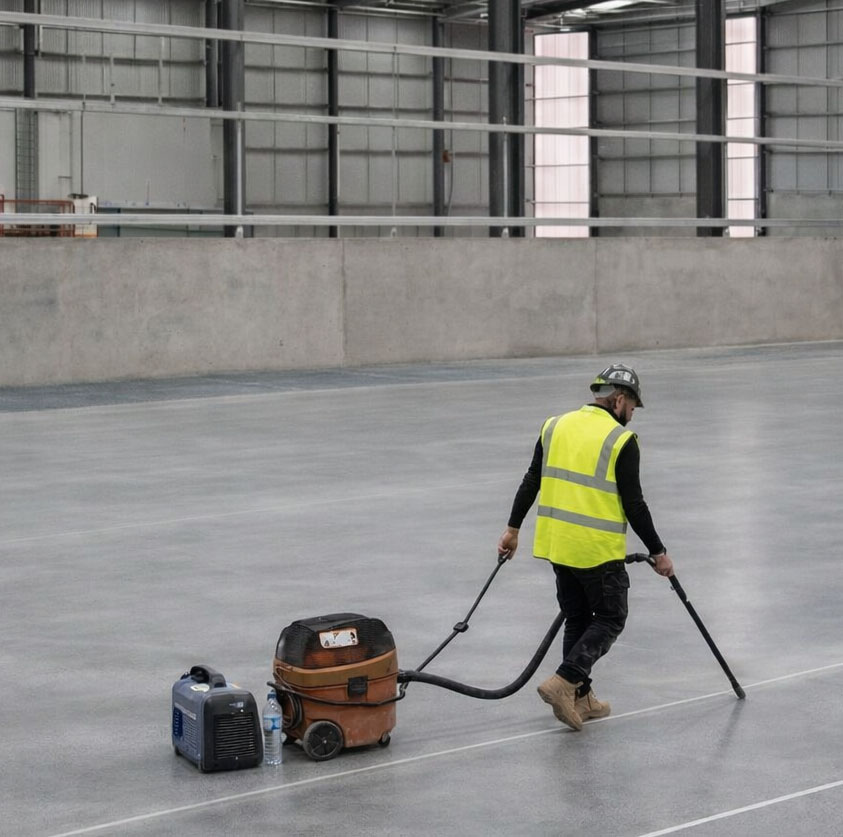
Adhesion is only as strong as the substrate. We utilise specialised joint-cleaning saws and diamond grinding equipment with integrated HEPA-filtered dust extraction to remove laitance, debris and weak concrete from the full depth of the saw cut. This ensures the filler bonds directly to sound concrete.
Step 2: Depth Assessment

For industrial saw-cut control joints, fillers are typically installed to the full depth of the saw cut (commonly 25–40mm) to provide continuous load-support along slab edges. Backer rod is generally not required, as control joints are designed for crack control rather than movement accommodation. Final depth is confirmed in accordance with project specifications and slab design requirements.

Step 3: Precision Material Installation

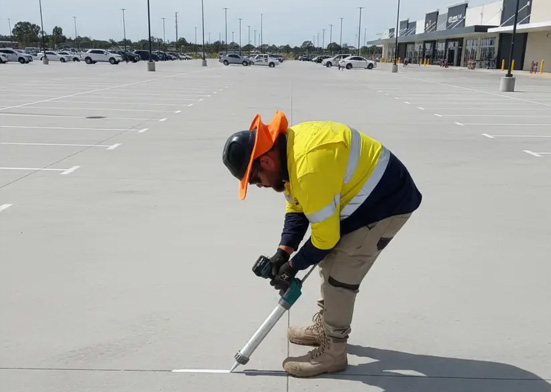
Using calibrated dual-component pumping or approved dispensing systems, semi-rigid polyurea or polyurethane fillers are installed at the manufacturer’s specified mix ratio to achieve the required hardness and durability rating.

Step 4: Flush Shaving & Finishing

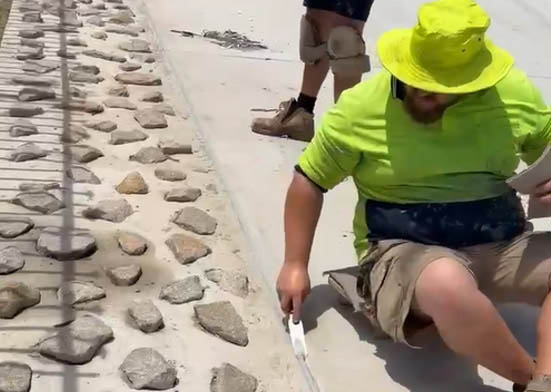
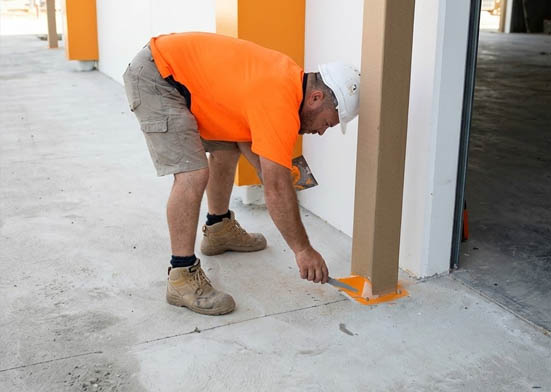
Following initial cure (typically 15–60 minutes depending on system specified), excess material is shaved flush using specialist floor razors. This creates a smooth, level transition across the joint, eliminating impact points for wheeled traffic and ensuring professional presentation.

Pavement Crack & Joint Sealing

INDUSTRIES WE SERVICE

We deliver high-performance control joint filling and saw-cut joint sealing solutions across a broad range of commercial, industrial, and infrastructure sectors, including:

Commercial & Retail

Commercial office developments
Retail centres and shopping complexes
Retail distribution spaces

Industrial & Logistics

Industrial warehouses
Distribution centres
Logistics and freight facilities
Manufacturing facilities
Commercial workshops

Public & Institutional

Hospitals and healthcare facilities
Educational institutions
Government and public infrastructure

Parking & Hardstand Infrastructure

Basement and multi-level car parks
Fuel forecourts and hardstand areas

CONTROL JOINT FILLING EXPLAINED​

Control Joint Filling for Industrial & Commercial Facilities

Industrial floors experience constant stress along joint edges. Without professional filling, repeated traffic leads to:
  • Joint edge spalling
  • Surface cracking and breakage
  • Slab deterioration
  • Increased maintenance costs
  • Trip hazards and operational risk

Timing Expertise

Industrial control joints are typically filled after the slab has completed its primary shrinkage cycle — often between 28–90 days post-placement depending on slab design and loading conditions.

For existing slabs, joint filling should be considered where there is:

  •  Visible joint edge chipping
  •  Missing or deteriorated filler
  •  Dusting or debris accumulation
  •  Uneven floor transitions

A professional assessment determines the correct timing and material selection.

Any structure exposed to structural movement or environmental stress requires professionally installed control joint sealing
to maintain waterproof integrity and long-term durability.

COMPLIANCES​

Completed in accordance with AS 3600, AS 4654 (where applicable), project specifications and manufacturer technical data sheets.

Where Every Seal Tells the Story

Key Advantages of Professional Control Joint Filling

Preventing Joint Edge Spalling

Unfilled saw-cut joints leave sharp slab edges exposed to impact damage. Professional filling reinforces these edges, preventing progressive chipping and structural degradation.
Supporting Long-Term Slab Performance

While control joints are not waterproofing systems, professional filling helps reduce moisture and contaminant ingress into the slab, supporting long-term durability — particularly in humid and coastal environments such as Brisbane, Gold Coast and Moreton Bay.

Fast, Efficient & Minimal Disruption

Our selected systems are engineered for:
• Rapid cure times
• Minimal operational disruption
• High load tolerance
• Clean, professional finishes
In many cases, operational areas can return to service the same day.
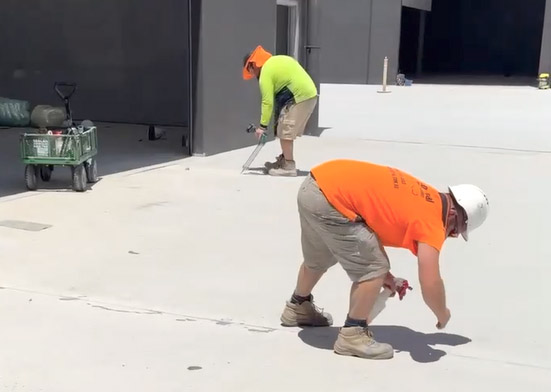
our projects

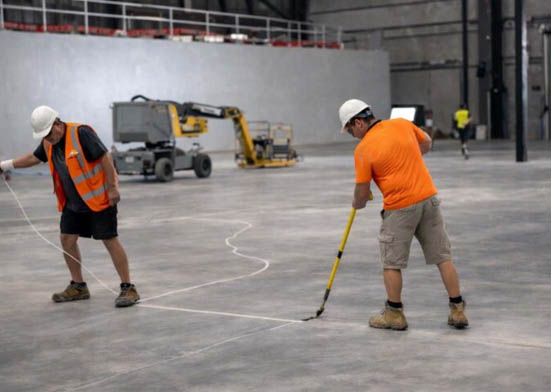
All work is completed in accordance with project documentation, manufacturer technical data and relevant Australian Standards.

Request a Site Inspection

Arrange a professional joint condition assessment for your facility in Brisbane, Gold Coast, Ipswich or Moreton Bay.

SealTech Industries provides technical evaluation and specification-based recommendations aligned to commercial performance standards.

FREQUENTLY ASKED QUESTIONS?

How long does control joint sealing last?
High-quality polyurethane and silicone systems typically provide 10–20 years of service life, depending on exposure conditions, movement cycles and maintenance practices.
Yes, when the correct sealant is used, saw cut joint sealing can withstand heavy vehicle and industrial traffic.

Proper timing ensures optimal adhesion, flexibility, and long-term performance of the saw cut joint sealing system.


What standards apply to saw cut joint sealing?

Saw cut joint sealing typically follows standards such as ASTM C920 and ASTM C1193, along with local construction standards.


What is saw cut joint sealing?

Saw cut joint sealing is the process of filling and sealing joints created by saw cutting concrete to control cracking and protect the slab.

Why is saw cut joint sealing important?

Saw cut joint sealing prevents water, debris, and chemicals from entering the joint, helping to maintain the durability of the concrete.

When should control joint sealing be completed in new construction?
After the concrete has adequately cured and dried, and before the joints are exposed to moisture, debris, or service conditions.

Not quite. A control joint is a saw-cut or grooved line that “controls” where concrete cracks as it shrinks. An expansion joint goes all the way through the slab to allow for thermal movement. Both require sealing.

Sealant depth should follow the manufacturer’s specification, typically using a backer rod to control depth and achieve proper joint geometry.

Brisbane

  • Ascot
  • Hamilton
  • New Farm
  • Teneriffe
  • Paddington
  • Bulimba
  • Bardon
  • Wilston
  • Highgate Hill
  • Indooroopilly

Gold Coast

  • Mermaid Beach
  • Broadbeach Waters
  • Burleigh Heads
  • Hope Island
  • Sanctuary Cove
  • Currumbin
  • Palm Beach
  • Varsity Lakes
  • Robina
  • Surfers Paradise

Ipswich

  • Springfield Lakes
  • Brookwater
  • Ripley
  • Brassall
  • Yamanto
  • Redbank Plains
  • Goodna
  • Bellbird Park
  • Augustine Heights
  • Raceview

Logan

  • Shailer Park
  • Daisy Hill
  • Cornubia
  • Springwood
  • Rochedale South
  • Loganholme
  • Beenleigh
  • Waterford
  • Meadowbrook
  • Park Ridge

Redland City

  • Wellington Point
  • Cleveland
  • Ormiston
  • Raby Bay
  • Birkdale
  • Thornlands
  • Capalaba
  • Victoria Point
  • Redland Bay
  • Mount Cotton