
SEALTECH INDUSTRIES

Expansion Joint Sealing & Movement Joints

Our engineered sealing systems are designed to accommodate structural movement while maintaining long-term waterproof integrity. As a trusted industrial expansion joint contractor, we specialise in delivering precise, code‑compliant expansion joint repairs and new sealing solutions that protect against water ingress, chemical exposure, and environmental stress.

Service Area: Concrete expansion joint Waterproofing and sealing across South-East Queensland and Northern NSW (Brisbane, Gold Coast, Ipswich, Moreton Bay, Redland City and surrounding regions.)

Pavement Crack & Joint Sealing

Why Concrete Expansion Joint Sealing Matters

Movement joints are dynamic — not static. They continuously open and close as structures respond to environmental and load-related stress.

The installed sealant must:

  • Stretch and compress without tearing
  • Maintain adhesion to joint sidewalls
  • Resist UV exposure and weathering
  • Withstand traffic loading where required
  • Remain watertight over time

Improper installation or incorrect sealant selection results in premature failure. SealTech Industries specifies commercial-grade polyurethane and silicone sealants selected according to movement capability, exposure classification and traffic requirements.

Proper installation by licensed expansion joint contractors ensures the seal performs under real-world conditions — not just during application.

Application and Sectors

Our concrete expansion joint sealing (Brisbane, Gold Coast) are delivered across:

Commercial office developments

Retail centres & shopping complexes

Multi-level car parks

Warehousing & logistics facilities

Civil infrastructure (bridges, culverts, hardstand areas)

Healthcare and educational facilities

Industrial processing facilities
Fuel forecourts

Any structure exposed to structural movement or environmental stress requires professionally installed movement joint waterproofing 
to maintain watertight integrity and long-term durability.

Why Choose SealTech Industries?

Our Gold Coast and Brisbane expansion joint waterproofing and sealing team combines technical expertise with precision installation to deliver systems built for long-term performance.

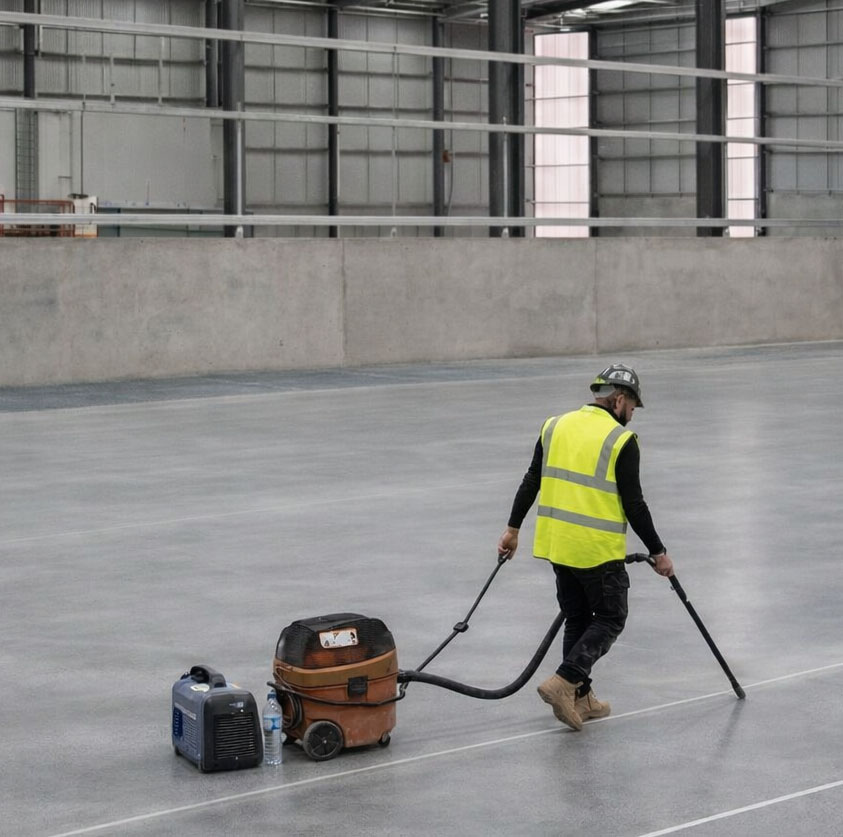
Dust-Controlled Preparation

All cutting and preparation works are undertaken using vacuum-shrouded equipment in accordance with Queensland WHS silica dust regulations.

SUBTRATE EXPERTISE

We are professional expansion joint contractors who understand the behavior of aged concrete, façade interfaces, asphalt-to-concrete transitions, and metal expansion assemblies.

SPECIFICATION-BASED INSTALLATION

All Brisbane & Gold Coast industrial expansion joint repairs and new sealant installations are completed in accordance with manufacturer technical data sheets and project documentation.

WARRANTY-ALIGNED WORKMANSHIP

We are compliant expansion joint contractors whose installations follow manufacturer‑approved methodologies to maintain product performance integrity.
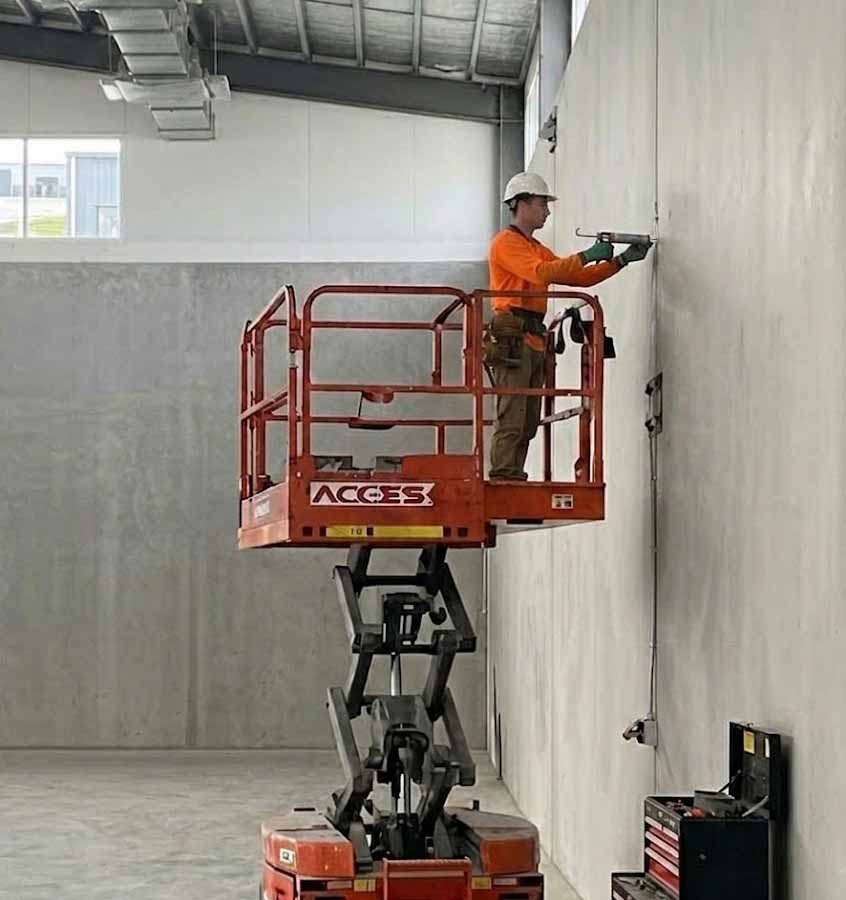

Expansion Joint Sealing

COMPLIANCES

Completed in accordance with AS 3600, AS 4654 (where applicable), project specifications and manufacturer technical data sheets.

The Technical Edge: Our 5-Step Process

We don’t simply “fill a gap.” We engineer a movement-accommodating sealing system based on joint design and exposure classification.

Step 1: Assessment & Specification

All cutting and preparation works are undertaken using vacuum-shrouded equipment in accordance with Queensland WHS silica dust regulations.
  • Movement capability (% elongation)
  • Modulus rating (high or low)
  • UV exposure
  • Chemical exposure (where applicable)

High-modulus polyurethane is typically used in trafficable areas.
Low-modulus silicone is often specified for façade and high-movement vertical joints

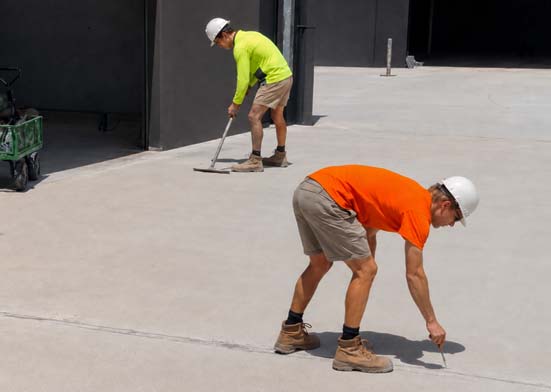
Step 2: Precision Saw-Cutting & Joint Preparation

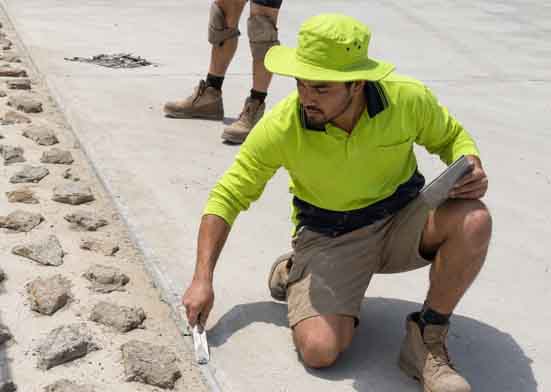
Using dust‑controlled cutting equipment, we are experienced concrete expansion joint contractors (Gold Coast & Brisbane) who refine joint geometry and remove deteriorated material. Maintaining the correct depth‑to‑width ratio is critical.

As a general guide:

  • 2:1 width-to-depth ratio for joints up to 12mm
  • 1:1 ratio for wider joints
Final dimensions are determined in accordance with product specifications.

Step 3: Backer Rod Installation

To prevent three-sided adhesion and allow proper movement:
We install closed-cell polyethylene backer rod to:

  • Act as a bond breaker
  • Control sealant depth
  • Support proper tooling
Three-sided adhesion causes premature tearing. Correct backer rod installation ensures flexibility.

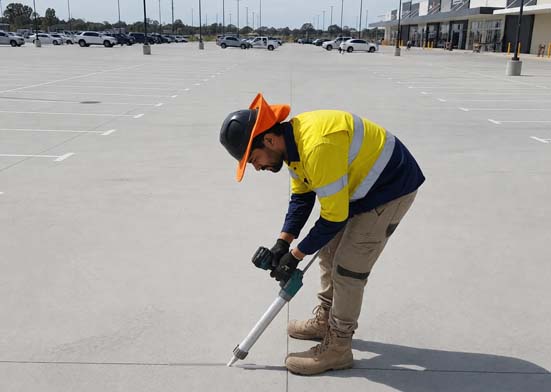
Step 4: High-Performance Sealant Application

Sealant is installed using professional bulk application systems to ensure void-free placement.

  • Achieve full sidewall adhesion
  • Create a concave or flush profile
  • Optimise water shedding and durability

Step 5: Professional Finishing & Inspection

Final profile is determined by traffic requirements:
  • Flush finish for trafficable surfaces
  • Slight recess for façade and aesthetic joints

All installations are visually inspected to ensure adhesion and continuity.

Building Excellence, One Project at a Time

Name

Latest Industrial Project

Where Every Seal Tells the Story

Every Gold Coast or Brisbane expansion joint maintenance project we complete reflects the care behind our work, from proper preparation and material selection to clean application and lasting performance. Whether it involves horizontal expansion joints or vertical expansion joints, it is more than sealing gaps; it is about protecting structures, preventing water ingress, and delivering workmanship built to stand the test of time.

our projects

All Gold Coast and Brisbane concrete movement joint sealing, waterproofing and maintenance work are carried out in accordance with project documentation, manufacturer technical data, and relevant Australian Standards.

Request a Site Inspection

Arrange a joint sealing inspection with our professional render expansion joint waterproofing team for your commercial or industrial facility in Brisbane, Gold Coast, Ipswich, or Moreton Bay.

SealTech Industries provides technical evaluation and specification-based recommendations aligned to commercial performance standards.

FREQUENTLY ASKED QUESTIONS?

How long does concrete expansion joint sealing last?

High-quality polyurethane and silicone systems typically provide 10–20 years of service life for concrete render expansion joints, depending on exposure conditions, movement cycles and maintenance practices.

Strictly speaking movement joint waterproofing and joint sealing are not required for literally every single structure (such as a basic, unhabitable backyard garden shed or a completely open-air steel shelter).

However, for all modern residential, commercial, civil, and industrial buildings, they are practically mandatory.

Modern building codes and engineering standards strictly enforce movement joint sealing and waterproofing because a building is dynamic, not static, and it must withstand both environmental movement and moisture.

Concrete expansion joints play a critical role in allowing structures to accommodate movement caused by temperature changes, load variations, and natural settling. Over time, joint sealants can deteriorate due to weather exposure, traffic, and general wear. Understanding when concrete expansion joint maintenance or resealing is required helps maintain the integrity, safety, and longevity of the structure.

  • Cracked or brittle sealant
  • Adhesion failure at joint edges
  • Visible gaps
  • Water ingress near slabs or façades
  • Rust staining or concrete spalling

    Early intervention prevents costly remedial concrete joint sealing.

It varies by “linear foot,” but expect higher costs for joints that require “nosing” (edge) reconstruction or overhead work in parking garages.


What are the signs that industrial expansion joints require repair?

Common signs that industrial expansion joint leak repair may be required include cracked or missing sealant, water leakage, joint widening, spalling concrete edges, or visible debris and vegetation within the joint. These issues can compromise structural integrity and should be addressed promptly.

Expansion joints contractors or remedial building works typically install and repair render expansion joints.

SealTech expansion joint maintenance team are licensed and NCC compliant render joint sealers.

Our expansion joint maintenance team typically responds within 24–48 hours, depending on location and severity.

SealTech offers emergency industrial expansion joint repair to ensure urgent sealing issues are handled without delay. As experienced expansion joint repair contractors, we are equipped to assess, seal, and restore failed joints quickly to minimise water ingress, downtime, and further structural damage.

Expansion joint repair contractors select materials based on traffic levels, chemical exposure, and whether the joint is internal or external. The most common commercial-grade materials include:

Polyurethane sealants: Excellent for exterior concrete, driveways, and pathways due to high flexibility and strong adhesion.

Silicone sealants: Highly UV-resistant, making them ideal for intense sun exposure and vertical joint applications.

Epoxy joint fillers: Semi-rigid materials used primarily in high-traffic industrial warehouse floors to protect joint edges from heavy forklift traffic.

Pre-formed compression seals: Heavy-duty physical seals used for high-movement commercial architectural joints or bridge decks.

Yes. Professional expansion joints contractors complete all expansion joint replacements or repairs in accordance with manufacturer technical data sheets and project documentation, ensuring compliance with Australian Standards.

When should concrete movement joint waterproofing completed in new construction?

Waterproofing expansion joints should be completed once the concrete has adequately cured and the joint is clean, dry, correctly formed, and ready to receive the specified sealing system. Installation should take place before the area is exposed to water, traffic, finishes, or other construction activities that may affect adhesion or joint performance.

Yes. Expansion joint maintenance and joint movement waterprofing are necessary for building structures that contain expansion joints, particularly where the joints are exposed to weather, water, traffic, chemicals, or repeated structural movement.

Over time, sealants, membranes, cover systems, and joint edges can deteriorate, crack, lose adhesion, or become damaged. Routine inspection and maintenance help prevent water ingress, concrete spalling, corrosion, interior damage, and premature joint failure.

Brisbane

  • Ascot
  • Hamilton
  • New Farm
  • Teneriffe
  • Paddington
  • Bulimba
  • Bardon
  • Wilston
  • Highgate Hill
  • Indooroopilly

Gold Coast

  • Mermaid Beach
  • Broadbeach Waters
  • Burleigh Heads
  • Hope Island
  • Sanctuary Cove
  • Currumbin
  • Palm Beach
  • Varsity Lakes
  • Robina
  • Surfers Paradise

Ipswich

  • Springfield Lakes
  • Brookwater
  • Ripley
  • Brassall
  • Yamanto
  • Redbank Plains
  • Goodna
  • Bellbird Park
  • Augustine Heights
  • Raceview

Logan

  • Shailer Park
  • Daisy Hill
  • Cornubia
  • Springwood
  • Rochedale South
  • Loganholme
  • Beenleigh
  • Waterford
  • Meadowbrook
  • Park Ridge

Redland City

  • Wellington Point
  • Cleveland
  • Ormiston
  • Raby Bay
  • Birkdale
  • Thornlands
  • Capalaba
  • Victoria Point
  • Redland Bay
  • Mount Cotton

Remedial movement joint waterproofing and sealing may cause temporary disruption, particularly where access, surface preparation, sealant removal, curing time, or traffic control is required.

However, the work can often be staged or scheduled outside normal operating hours to minimise downtime and maintain safe building operations.

Most standard epoxies will fail. However, specialized “moisture-tolerant” primers can allow for repairs on damp (but not saturated) substrates.

Why is industrial expansion joint repair important for facilities?

Industrial expansion joint repair helps maintain the structural integrity of floors, walls, and external concrete areas in industrial facilities. Properly functioning joints prevent water intrusion, reduce the risk of concrete damage, and support the long-term durability and safety of the structure.

Vertical panel movement joints are specially designed joints installed between vertical wall or façade panels to accommodate structural movement caused by thermal expansion, contraction, building settlement, and wind loads. 

These joints help prevent cracking, water penetration, and panel damage. waterproofing expansion joints ensure these vertical joints remain sealed, flexible, and protected against moisture ingress while allowing the building panels to move safely without compromising the structure.

Expansion joint replacement is the process of removing failed or deteriorated joints and installing new systems to restore movement capacity, waterproofing, and compliance with building codes.

A movement joint is a planned gap or joint built into a structure to allow parts of the building to move safely without cracking or damaging surrounding materials.

Buildings naturally move because of:

  • Thermal expansion and contraction
  • Concrete shrinkage
  • Building settlement
  • Wind movement
  • Structural loading
  • Seismic or vibration movement

Movement joints are commonly found in concrete slabs, walls, façades, balconies, car parks, rooftops, and high-rise buildings. Without them, pressure can build up in rigid materials like concrete, brick, tiles, or panels, causing cracks, spalling, leaks, or structural damage.

Movement joint waterproofing is the process of sealing and protecting these joints so they can remain watertight while still allowing movement. This usually involves flexible sealants, joint fillers, backing rods, expansion joint systems, or waterproof membranes designed to stretch, compress, and move with the building.

In simple terms: a movement joint allows the building to move, while movement joint waterproofing keeps that moving joint sealed against water ingress. This is especially important in exposed areas such as façades, rooftops, balconies, podium slabs, car parks, basements, and external concrete joints. 

Yes. We understand that a total halt in production is rarely an option. Our industrial expansion joint emergency repair service utilises rapid-curing polyurea and heavy-duty commercial elastomeric compounds designed to accept heavy vehicle traffic (like forklifts and reach trucks) within 45 to 90 minutes of application.

Our professional waterproofing expansion joints also offer phased, out-of-hours, or night-shift scheduling to isolate the repair zone while keeping the rest of your plant operational.