
Understanding Control Joints in Precast Concrete Walls
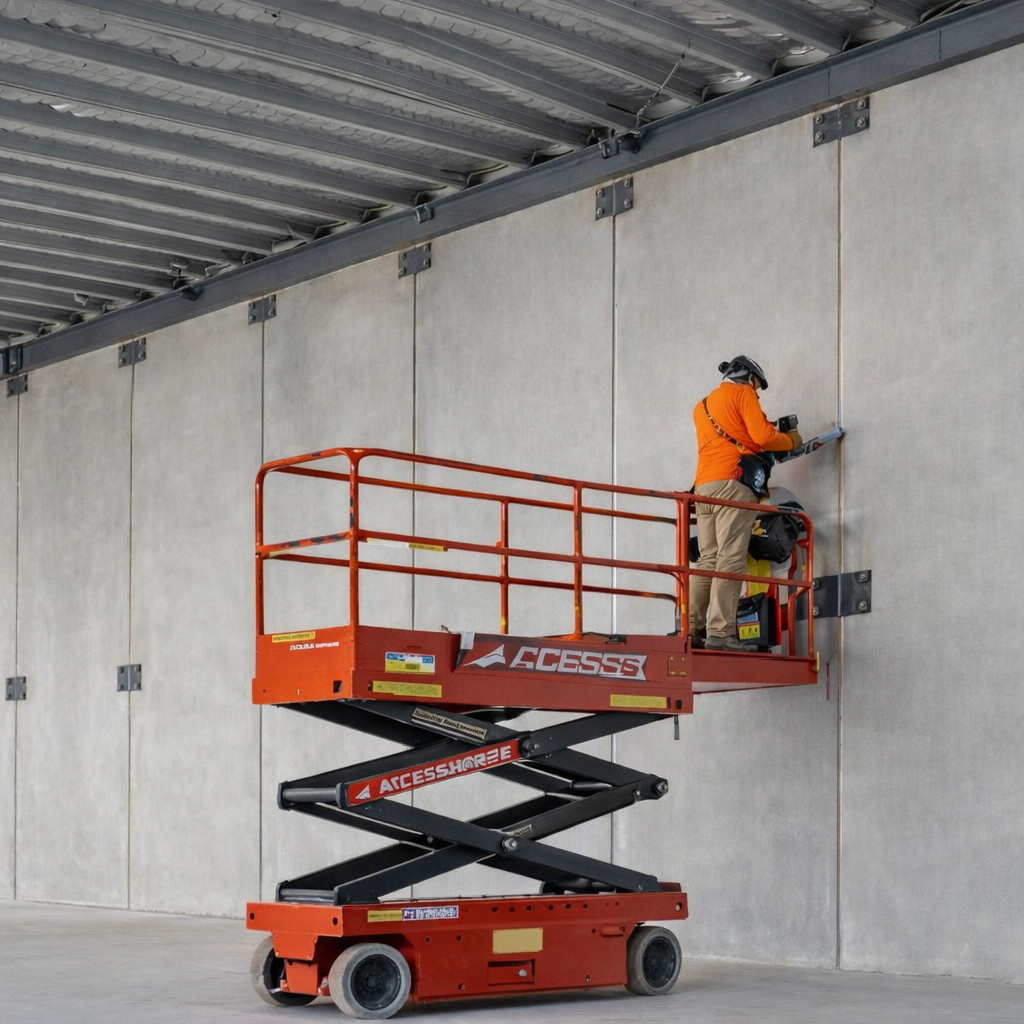
When it comes to precast concrete wall systems, many people notice the vertical joints between panels—but those seams are only one component of a much broader jointing strategy. Properly designed and sealed precast joints are critical to the structural performance, durability, and waterproofing integrity of any precast building envelope.
In this article, we break down the different types of control and movement joints found in precast concrete wall systems and explain why each one matters.
1. Vertical Control Joints
Vertical control joints are the most visible joints in precast wall systems. They run vertically between adjacent panels along the building façade.
Purpose:
- Accommodate horizontal thermal movement
- Manage shrinkage and creep
- Prevent uncontrolled cracking
- Maintain watertightness
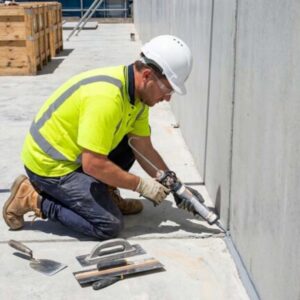
Precast joints are typically sealed with high‑performance polyurethane or silicone sealants to prevent water ingress and air leakage. For long‑term durability and compliance, this work should only be carried out by licensed precast joint sealing specialists who follow industry standards and building code requirements.
2. Horizontal Joints
Horizontal joints occur between stacked precast panels, particularly in multi-storey construction.
Purpose:
- Allow for vertical building movement
- Accommodate slab deflection
- Manage differential settlement
- Maintain weatherproofing continuity
Because gravity loads and structural deflection affect these joints, proper detailing is essential to prevent stress transfer into the panels.
 3. Expansion Joints (Structural Movement Joints)
Expansion joints are full-depth separations in the structure, not just surface joints.
Purpose:
- Accommodate significant thermal expansion and contraction
- Separate large building sections
- Allow independent structural movement
These joints are often installed in long building elevations or between structural wings to prevent stress buildup across the structure.
4. Isolation Joints
Isolation joints separate precast panels from other structural elements such as slabs, steel framing, or columns.
Purpose:
- Prevent load transfer
- Allow differential movement
- Reduce cracking caused by structural interaction
They ensure that movement in one component does not create stress in another.
5. Corner Joints
Corner joints occur where two wall planes intersect—either internally or externally.
Purpose:
- Accommodate movement in two directions
- Maintain weatherproofing at critical transition points
- Corners are high-risk areas for water penetration and must be detailed carefully.
6. Window and Door Perimeter Joints
Openings introduce another layer of complexity in precast wall systems.
Purpose:
- Seal transitions between precast panels and window/door frames
- Manage differential movement between materials
- Prevent water and air infiltration
Because different materials expand and contract at different rates, these joints are particularly vulnerable if not properly specified and maintained.
7. Slab-to-Wall Joints
These joints occur at the interface between floor slabs and precast wall panels.
Purpose:
- Allow slab deflection without stressing the wall
- Maintain fire and acoustic separation
- Prevent cracking at structural connections
They are especially important in multi-level commercial and industrial buildings.
Why Proper Joint Design Matters
Precast concrete is durable, but it is not immune to movement. Thermal expansion, structural loading, shrinkage, creep, and settlement all create forces that must be managed. Without properly designed and maintained joints:
1. Controlled Cracking (The “Pre-Planned” Failure): By cutting a joint to a depth of at least 1/4 the thickness of the slab, you create a weakened plane. This forces the crack to happen neatly at the bottom of the groove where it is hidden and manageable.
2. Managing Thermal Expansion: Concrete is a dynamic material; it grows when it’s hot and shrinks when it’s cold. Proper spacing (usually 24 to 30 times the slab thickness) ensures each section has enough “elbow room” to move without damaging its neighbor.
3. Creating a “Sealant Reservoir”: A joint isn’t just a crack; it is a container for the sealant. If the joint is designed poorly, the sealant will fail regardless of its quality. Sealants perform best when they are wider than they are deep (the 2:1 width-to-depth ratio). A thin, wide band of sealant can stretch like a rubber band. A deep, plug-like bead of sealant is too rigid and will tear away from the concrete walls (adhesive failure) as soon as the slab moves.
4. Load Transfer and Alignment: In high-traffic areas like driveways or warehouse floors, joints must be designed to transfer weight from one slab to the next. If slabs are not properly jointed or doweled, one side may sink lower than the other (known as differential settlement). This creates a “lip” that is a trip hazard and causes tires to hammer the edge of the concrete, leading to rapid breakdown.
Joint width, depth, backing materials (such as backer rod), bond breakers, and sealant selection must all be engineered for the specific application.
When the precast joint sealing is needed?
 1. During Initial Installation (New Construction)
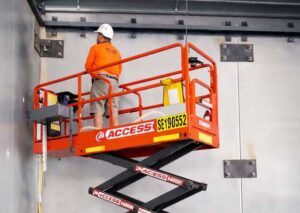
In precast construction, sealing is not an “afterthought”—it is a structural necessity to finalize the building envelope. Once the panels are bolted or welded into place, the gaps (usually 10mm to 30mm) must be sealed to make the building airtight and watertight.
2. When Environmental Protection is Required
You must seal precast joints to defend the structure against specific “enemies”
- Air & Thermal Leaks: In industrial or commercial buildings, unsealed joints lead to drafts and massive energy loss, making it impossible to control the internal climate.
- Pest & Debris Control: Open joints in warehouses or agricultural “silage clamps” collect organic matter that rots, attracts pests, and weakens the joint edges
3. Maintenance & Repair (The “Warning Signs”)
Precast joints are dynamic; they move constantly. You need to reseal or repair them if you notice adhesive failure, cohesive failure, staining and efflorescence:
Final Thoughts
Vertical control joints are just one part of a comprehensive jointing system in precast concrete construction. Horizontal joints, expansion joints, isolation joints, corner joints, and perimeter joints all play critical roles in ensuring structural integrity and waterproofing performance.
Understanding these joint types—and maintaining them correctly—is essential for extending the life of a precast building and protecting it from costly precast joint sealing and structural issues.
Related topics